By Bryan A. Banks
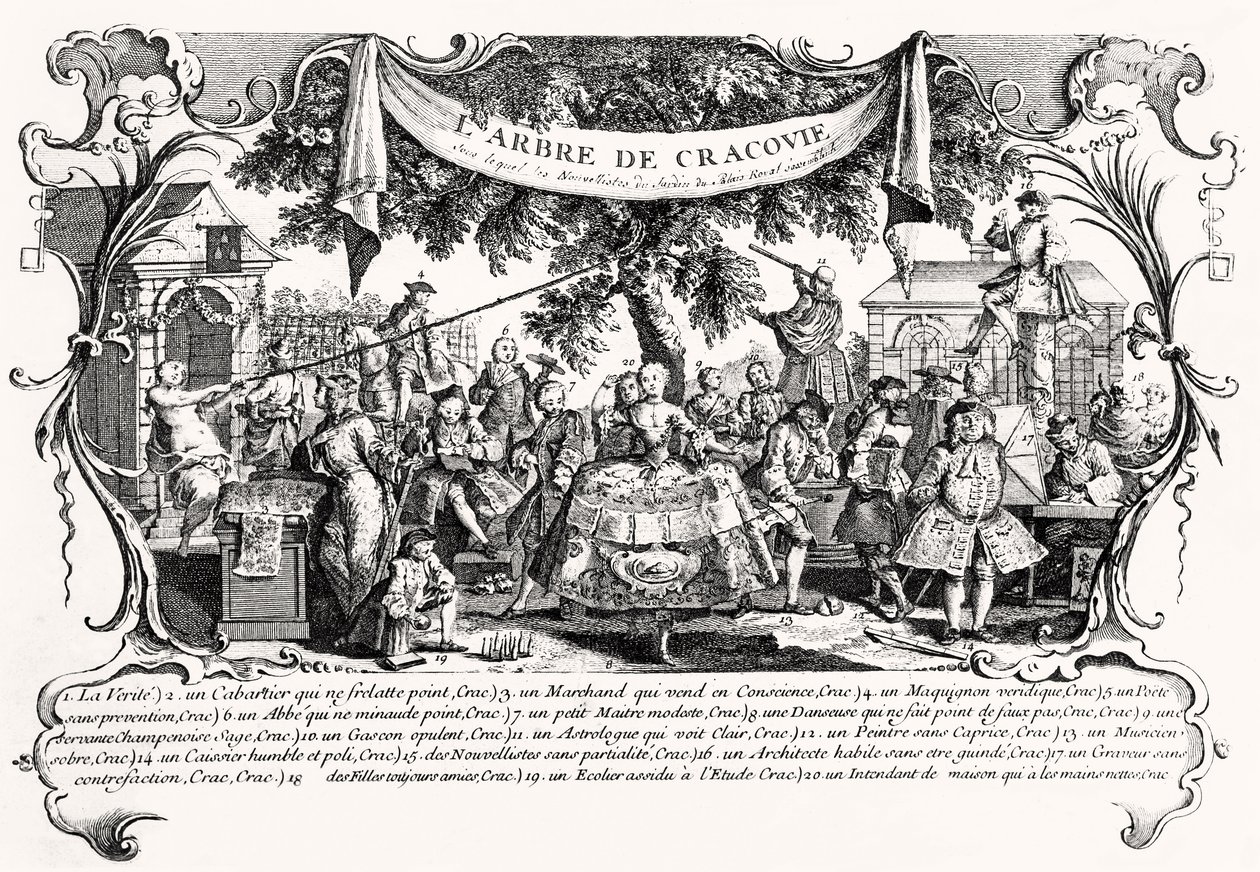
The Tree of Cracow was a large chestnut tree in Paris. The tree supposedly got its name from a rather raucous debate over the War of the Polish Succession (1733-1735), but it was famous for its role as the water cooler, as it were, of the eighteenth century. Under its canopy, people talked politics, rumors, gossip, and international intrigue. Under this tree, they talked about their past and imagined many futures.
In 2000, Robert Darnton talked about this tree as a metaphor for the early Internet—its possibilities, and the lessons the tree could provide us. The internet has grown into quite the tree since Darnton’s sapling of 2000. The trees where people may gather have proliferated, but the shade under those trees isn’t necessarily meant to be enjoyed by all. To take a lesson from one of Darnton’s favorite Enlightenment philosophers, Voltaire, sometimes, when you get frustrated with the world, you’ve got to remember to “cultivate your own garden.” Age of Revolutions is our Tree of Cracow, planted at the center of our garden.
In the ever-evolving landscape of academic research, the importance of open access publication cannot be overstated. Open access ensures that research findings are freely available to anyone with an internet connection, breaking down barriers that traditionally limited access to knowledge. Our original goal with Age of Revolutions was simply to provide a space for conversations. Formerly unfolding in hotels and conferences centers, these dialogues could now be published on our platform for anyone in the world with an interest (and open internet access) to enjoy. We’ve even partnered with the Consortium on the Revolutionary Era to do just this. Nine years after its inception, we still aim for that goal, but our aspiration is greater. We hope to make information more accessible—valuable, necessary information about our past to better inform our present.
For prospective authors, we hope it is self-evident, but open access publication offers numerous benefits. It enhances the visibility and impact of an author’s work, allowing it to reach a broader audience, including fellow researchers, policymakers, and the public. This increased accessibility fosters greater collaboration and innovation, as authors can build upon each other’s work without the constraints of paywalls.
Moreover, open access democratizes knowledge. It provides equal opportunities for researchers from all corners of the globe, regardless of their institution’s financial resources. This inclusivity is crucial for addressing global challenges, as it allows diverse perspectives and expertise to contribute to the collective understanding and, ideally, to solutions. As we continue to advocate for open access, we move closer to a future where knowledge is truly a public good, accessible to all and driving progress across disciplines.
Reflecting on our journey, we are proud to celebrate nine years of publishing groundbreaking research through our open access platform. Over nearly a decade, we have witnessed the transformative power of freely accessible knowledge. Our commitment to open access has enabled countless researchers to share their insights and innovations with the world, fostering a vibrant and inclusive academic community. As we look to the future, we remain dedicated to supporting and advancing the principles of open access for the benefit of all. We want our Tree of Cracow to flourish to its fullest potential.
Send us a pitch!
Title Image: Antoine Humblot, L’Arbre de Cracovie, 1742. Source: Meisterdruck.
Leave a Reply