By Jack Zapotochny
Part 2: The Reflections and Restoration Tragedy
Edmund Burke represented the French Revolution as an affront to tradition and historical progress, persuading his audience to share his opposition to the revolution. Burke emphasized this perception of the rebels by presenting pathetic depictions of the violence and barbarism of the Revolution in his Reflections. Burke initiates his translation of the events of the French Revolution into a rhetorical drama by presenting a generic description of the revolution. He states, “In viewing this monstrous tragicomic scene, the most opposite passions necessarily succeed and sometimes mix with each other in the mind: alternate contempt and indignation, alternate laughter and tears, alternate scorn and horror.”[1]
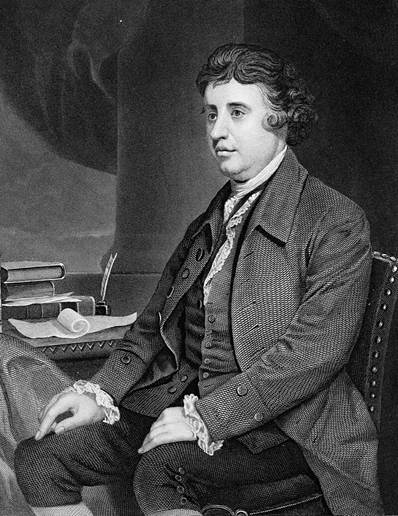
Edmund Burke, Source: Wikipedia
Among the passions evoked by the French Revolution, Burke’s description of “laughter and tears” corresponds to his characterization of the revolution as a tragicomedy. He specifies further that these emotional responses comprise “scorn and horror,” positing scornful laughter as a response to the regicidal ideology of revolutionary France and “horror” as a reaction to the violence of the revolution. Burke’s treatment of the French Revolution as a drama underlies his public denunciation of the revolution throughout his writings. De Bruyn asserts that “the metaphor….of revolution as grand, tragic theatre must be one of the most sustained leitmotivs running through the outpouring of letters, pamphlets, speeches, and treatises that the events in France provoked from Burke.”[2] Burke insightfully saw the French Revolution as a theatrical spectacle, observing the passionate reactions of the English public comprising horror, scorn, and Jacobin sympathy.
Burke conceives of tragicomedy as the most appropriate genre in which to convey the radicalism and regressive ideology of the French Revolution. While there is no obvious comedy in Burke’s tragic rendering of the French Revolution, he appeals to the realism and emotional resonance of this genre to evoke the disapproval of his audience. By depicting the revolution as a misguided campaign of personal ambition, Burke invokes the conventional depiction of error and confusion alongside tragedy in tragicomedy. The eighteenth-century author William Kenrick reflected on the genre of the tragicomedy in his “Defense of Tragicomedy,” published in Oliver Goldsmith’s Essays and Criticisms (1798). Kenrick asserts, “That the mingled drama may convey all the instruction of Tragedy or Comedy cannot be denied; because it includes both in its alterations of exhibition, and approaches nearer than either to the appearance of life, by shewing how great machinations and slender designs may promote or obviate one another….by unavoidable concatenation.”[3] During the French Revolution, the “great machinations” of establishing an egalitarian state coincided with the base or “slender designs” of terrorizing the royal family and the aristocracy. Kenrick was a contemporary of Burke’s and an active participant in the pamphlet culture of eighteenth-century Britain. He provides an insight into the literary and theatrical discourses underlying Burke’s perception of events like the French Revolution.
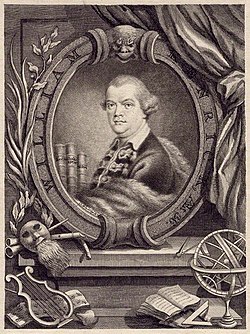
William Kenrick, 1766, Wikipedia
Jon P. Klancher discusses Burke’s Reflections in The Making of English Reading Audiences, 1790–1832, arguing that Burke’s depiction of the French Revolution as a tragic spectacle includes confusion exemplary of the downfall of great machinations in tragicomedy. He asserts, “The French Revolution could be imagined theatrically, Edmund Burke shrewdly reminded his readers in Reflections on the Revolution in France, as an erratically authored spectacle for the benefit of a bewildered English audience.”[4] Burke’s emphasis on the violence and injustice of the revolution presented a caricature which was exemplary of the confusion and disappointment of tragicomedy. Klancher proceeds to argue that “Burke turns the French revolutionaries into failed world-historical authors, playwrights of a tragedy that spills off the stage, thus negating the laws of Aristotelian dramatism by failing to resolve their violent struggles in any satisfyingly symbolic way.”[5] The lack of resolution in Burke’s depiction of revolutionary furor in France clarifies his reference to the revolution as a tragicomedy, as he argues that the revolutionaries’ design to establish a new state inevitably fails.
Restoration dramas surrounding the theme of revolution loomed in the English consciousness in the late eighteenth century, during the revolutions in Britain’s thirteen North American colonies and France. Thomas Otway’s Venice Preserv’d, or a Plot Discover’d (1682) is not an overt tragicomedy, but it evokes the scorn and horror of revolutionary furor that Burke expresses in his Reflections on the Revolution in France. There is a parallel expression of revolutionary corruption in the plot of Otway’s Venice Preserv’d and the French Revolution as Otway’s protagonist, Jaffeir, defies his fellow rebels upon discovering that their uprising would entail the murder of the Venetian senate. Jaffeir condemns the revolution he had conspired to support as he entreats in Act II, “I but half wished to see the devil, and he’s here already! Well! What must this buy? Rebellion, murder, treason?….which way I must be damned for this?”[6] Jaffeir proceeds to characterize revolution as a crime by syntactically aligning rebellion with murder and treason.
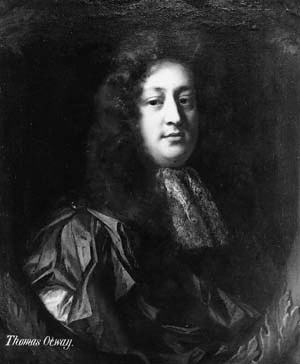
Thomas Otway, Wikipedia
Venice Preserv’d retained its popularity during the eighteenth century and caused significant controversy during the French Revolution. Daniel O’Quinn’s article “Insurgent Allegories: Staging Venice Preserv’d, The Rivals, and Speculation in 1795” examines the controversy of Venice Preserv’d amid its performances during the French Revolution. O’Quinn’s article concerns a brief period between October and November of 1795, in which the Tory government suspended performances of Otway’s play. O’Quinn states, “During this brief period the license for one of the most popular and successful plays in the traditional repertory, Thomas Otway’s Venice Preserv’d, was revoked and the play was consigned to theatrical oblivion because it was deemed too incendiary for the London stage.”[7] The interest in Venice Preserv’d taken by the ministry of Lord North demonstrates not only that the play was controversial, but that its popularity was sufficient to influence public opinion. The British government actively supported the counter-revolution in France and enacted legislation to repress Jacobinism and revolutionary sentiment in Britain. According to O’Quinn, “There was widespread public consensus, especially among the lower orders, that the famine which had swept through the country was integrally related to the economic hardships incurred by the war.”[8] This description indicates that Britain’s involvement in France’s counter-revolution had an adverse effect on the lower classes in Britain. O’Quinn tells us that, as opposition to Britain’s policy on the French Revolution spread throughout the public, “the Ministry was losing the propaganda war against reform and was desperate for a means to justify not only its foreign policy, but also its incursion on the rights of dissident citizens.”[9] This controversy surrounding Venice Preserv’d occurred five years after the publication of Burke’s Reflections, revealing that Otway’s play was a salient dramatic expression of rebellion during the French Revolution, and could influence the dramatic interpretation of revolution in Burke’s Reflections.
Venice Preserv’d likely informed Burke’s resonant portrayal of the rebels frenzied persecution of Marie Antoinette in the Reflections. Christopher Reid’s article “Burke’s Tragic Muse” positions the eighteenth-century actress Sarah Siddons as a performative exemplar of the tragedy Burke observed in the French Revolution. Reid tells us that, as “the greatest tragic actress of her generation, [Siddons] would have been for Burke, in the decade leading up to the publication of the Reflections, the most striking dramatic representation of the female distress which is generally regarded as its rhetorical centerpiece.”[10] Siddons famously played Belvidera in a 1774 staging of Venice Preserv’d. Burke’s admiration for Siddons and the scrutiny the play received during the French Revolution suggest the play as a model for Burke’s pathetic argument in the Reflections.
In the Reflections, Burke presents a synthesis of his historical rhetoric and dramatic devices as he illustrates the licentious excess of the French Revolution by narrating the rebels’ invasion of the bedrooms of King Louis and Marie Antoinette. This depiction portrays the king and queen as innocent victims of the brutality of the revolution. Burke narrates the monarchs’ moments of private tranquility preceding the rebels’ illicit invasion by saying “the king and queen of France, after a day of confusion, alarm, dismay, and slaughter, lay down, under the pledged security of public faith, to indulge nature in a few hours of respite.”[11] This description first affirms the rightful authority of Louis XVI and Marie Antoinette by identifying them formally as “the king and queen of France.” Burke asserts further that their safety relies on the pledge of “public faith.” This statement implies that invading the personal security of the king and queen breaks the faith of the public and violates the social contract. Burke does not describe the revolution as a struggle against tyranny but narrates an instance in which the rebels violate the personal security of individuals, rather than defy a corrupt government. Burke’s depiction of the precarious respite of the king and queen as an indulgence of “nature” conveys an image of the royals as human beings whose natural rights the rebels disregard. Burke narrates the rebels’ violent incursion into the residence of the king and queen as he recounts:
A band of cruel ruffians and assassins […] rushed into the chamber of the queen and pierced with a hundred strokes of bayonets and poniards the bed from whence this persecuted woman has but just time to fly almost naked, and, through ways unknown to the murderers, had escaped to seek refuge at the feet of a king and husband not secure of his own life for a moment.[12]
This depiction carefully presents Louis XVI and Marie Antoinette as victims of revolutionary bloodlust. Burke does not ascribe authority to the king and queen, but instead describes Marie Antoinette as a “persecuted woman” and Louis as “a king and husband not secure of his own life.” These descriptions present the implication that the rebels have overturned the authority of the French monarchy and become tyrants holding the power of life and death over their opponents. Similarly, Burke does not suggest that the rebels are downtrodden or disdainful of tyranny. He rather describes them as “ruffians, “assassins,” and “murderers.”
Burke concludes this narrative by presenting the binary opposition of the rightful security of the royal family and their expulsion by the unbridled rapacity of the revolution. Burke states that the French royal family “were then forced to abandon the sanctuary of the most splendid palace in the world, which they left swimming in blood, polluted by massacre and strewed with scattered limbs and mutilated carcasses.”[13] Burke reveals his allegiance to institutional authority by depicting the violation of the French monarchy as a “splendid palace” rendered into a grotesque scene of murder and indignity. Burke presents this pathetic narrative of the violation of the domestic security of the king and queen of France as a device of historical rhetoric, suggesting that the rebels will leave a shameful example to posterity. He asserts that “history, who keeps a durable record of all our acts and exercises her awful censure over the proceedings of all sorts of sovereigns, will not forget either those events or the era of this liberal refinement in the intercourse of mankind.”[14]
Burke’s image of the rebels personally threatening the Queen of France in the Reflections displays the resonance of Restoration tragedy. The scene of the rebels’ infringement into the royal family’s home and rapacious threat to Marie Antoinette reflects the revelation of the attempted rape of Belvidera, Jaffeir’s wife in Venice Preserv’d. This scene demonstrates a pathetic condemnation of the rebellion, as the play reveals the abject villainy of the chief rebel, Renault. Jaffeir reviles Renault’s attack on Belvidera as he declares “Renault, (That mortified, old, withered, winter rogue,)….I’ve found him out at watering for my wife; he visited her last night, like a kind guardian.”[15] Jaffeir presents a similar instance of the violation of domestic security to Burke’s narration of the rebels’ incursion into Marie Antoinette’s bedroom by accusing Renault of attempting to “take the freedom of a lady’s chamber.” This accusation reflects Burke’s portrayal of the depravity of the French rebels as he recounts that “[a] band of cruel ruffians and assassins, reeking with blood, rushed into the chamber of the queen.” Burke reiterates the overarching condemnation of the rebellion in Venice Preserv’d by presenting a heinous portrayal of the rebels in France. In Venice Preserv’d, Jaffeir conflates Renault’s lecherous predation with the corruption of the rebellion by saying “our cause is in a damned condition: for I’ll tell thee, that canker-worm, called lechery, has touched it; ‘Tis tainted vilely.”[16] Burke’s depiction of the French revolutionaries in the scene of their abduction of Marie Antoinette and King Louis characterizes the French Revolution not as an organized effort of reform, but an uprising based on violent and corrupt motivations. The reflection of Venice Preserv’d in Burke’s tragicomic rendering of the French Revolution exemplifies Burke’s use of dramatic conventions to convey his opposition to the revolution to a public audience.
Jack Zapotochny completed a Ph.D. in English at York University in 2022 in the field of Restoration and 18th-century literature. His doctoral research analyzed the expression of opposition in various publications by Whip MPs in the late 18th century. Jack is an instructor at Ontario College of Art and Design University, teaching English course with cultural and historical focuses. He has also taught writing and communications at several Canadian universities and colleges. Jack’s current research examines the development of Enlightenment thought in 18th-centry literature, including fiction, drama, and poetry.
Title Image: Lord Rockingham and Edmund Burke by Sir Joshua Reynolds. Source: Wikimedia Commons.
Further Readings:
Binney, Matthew W. “Edmund Burke’s Sublime Cosmopolitan Aesthetic.” Studies in English Literature, 1500-1900. Vol. 53, No. 3, (2013): 643-666.
Bourke, Richard. “Party, Parliament, and Conquest in Newly Ascribed Burke Manuscripts.” The Historical Journal. Vol. 55, No. 3 (2012): 619–652.
Bromwich, David. The Intellectual Life of Edmund Burke. The Belknap Press of Harvard UP, 2014.
Browne, Stephen H. “Edmund Burke’s ‘Discontents’ and the Interpretation of Political Culture.” Quarterly Journal of Speech. Vol. 77, No. 1 (1991): 53-66.
Crowe, Ian. “Patriotism and Public Spirit: Edmund Burke and the Role of the Critic in Mid-Eighteenth-Century Britain. Stanford UP, 2012.
Dickinson, H.T. Liberty and Property: Political Ideology in Eighteenth-Century Britain. Methuen, 1977.
Fabricant, Caroline. “Pope’s Moral, Political and Cultural Combat.” Pope. Edited by Brean Hammond, Routledge, 1996.
Kramnick, Isaac. The Rage of Edmund Burke: Portrait of an Ambivalent Conservative. New York: Basic Books, 1977.
Endnotes:
[1] Edmund Burke, Reflections on the Revolution in France. Edited by J.G.A. Pocock, Hackett (1987), 9.
[2] Franz De Bruyn, The Literary Genres of Edmund Burke: The Political Uses of Literary Form (Clarendon, 1996), 165.
[3] William Kenrick, “Defense of Tragicomedy with Some Thoughts on the Burlesque,” in Essays and Criticisms, Edited by Oliver Goldsmith, J. Johnson, 1798. Eighteenth Century Collections Online, Gale, 65.
[4] Jon P. Klancher, The Making of English Reading Audiences, 1790–1832 (University of Wisconsin Press, 1987), 103.
[5] Klancher, 103.
[6] Thomas Otway, Venice Preserv’d, or, A Plot Discover’d, 2.111, Five Restoration Tragedies, edited by Bonamy Dobree (Oxford UP, 1960).
[7] Daniel O’Quinn, “Insurgent Allegories: Staging Venice Preserv’d, the Rivals, and Speculation in 1795,” Literature Compass, vol. 1 (2003), 2.
[8] O’Quinn, 2.
[9] O’Quinn, 3.
[10] Christopher Reid, “Burke’s Tragic Muse: Sarah Siddons and the ‘Feminization’ of the Reflections,” in Burke and the French Revolution: Bicentennial Essays, edited by Steven (ed.) Blakemore, 1–27. (University of Georgia Press, 1992), 2.
[11] Burke, 62.
[12] Burke, 62.
[13] Burke, 62.
[14] Burke, 62.
[15] Otway, 3.401.
[16] Otway, 3.400.
 Age of Revolutions


_-_Lord_Rockingham_and_Edmund_Burke_-_653_-_Fitzwilliam_Museum.jpg)