Call for Papers: Two Parts
Part One: Graduate Workshop on Early modern Caribbean and Atlantic Slavery and Emancipation
We welcome graduate students working on topics related to early modern Caribbean and Atlantic slavery and emancipation to participate in a one-day graduate seminar on Thursday 22 October 2026 at the KITLV in Leiden, The Netherlands. The KITLV is a research institute dedicated to the study of societal challenges, focusing on the histories and afterlives of colonialism in the Caribbean, Southeast Asia, and the Netherlands.
The graduate workshop offers the opportunity for PhD candidates at different stages of their projects to present a chapter, an article draft, or research paper in a small and specialized setting. Participants can expect to receive constructive feedback from peers and invited senior scholars in the field.
The workshop aims to foster open discussion across imperial and linguistic contexts and methodological approaches and welcomes contributions at different stages of completion. The seminar will take place at the KITLV, Leiden.
Please notify your interest to participate by emailing your tentative proposal before March 30th. Papers will be circulated among the participants in October.
This seminar is organized in tandem with the workshop Reinterpreting the Caribbean age of revolutions: Slave revolts, their non-slave participants and proto-citizenship on Friday 23 October 2026.
Timeline:
Deadline for abstracts (1 page): 30 March 2026, please send to: negron@kitlv.nl
Deadline of papers: 28 September 2026, please send to: negron@kitlv.nl
Date graduate workshop: 22 October 2026.
Venue: KITLV, Herta Mohr building, room 1.30, Witte Singel 27 A, Leiden, The Netherlands.
Extra information: Participants are welcome to attend the dinner on Thursday 22 October and the workshop on Friday 23 October (free of charge). Lunch and coffee/tea are provided. Unfortunately, we cannot cover travel or accommodation expenses at this time.
Contacts:
Ramona Negrón: negron@kitlv.nl
Karwan Fatah-Black: k.j.fatah@hum.leidenuniv.nl
Part Two: Reinterpreting the Caribbean Age of Revolutions: Slave Revolts, Their Non-Slave Participants and Proto-Citizenship
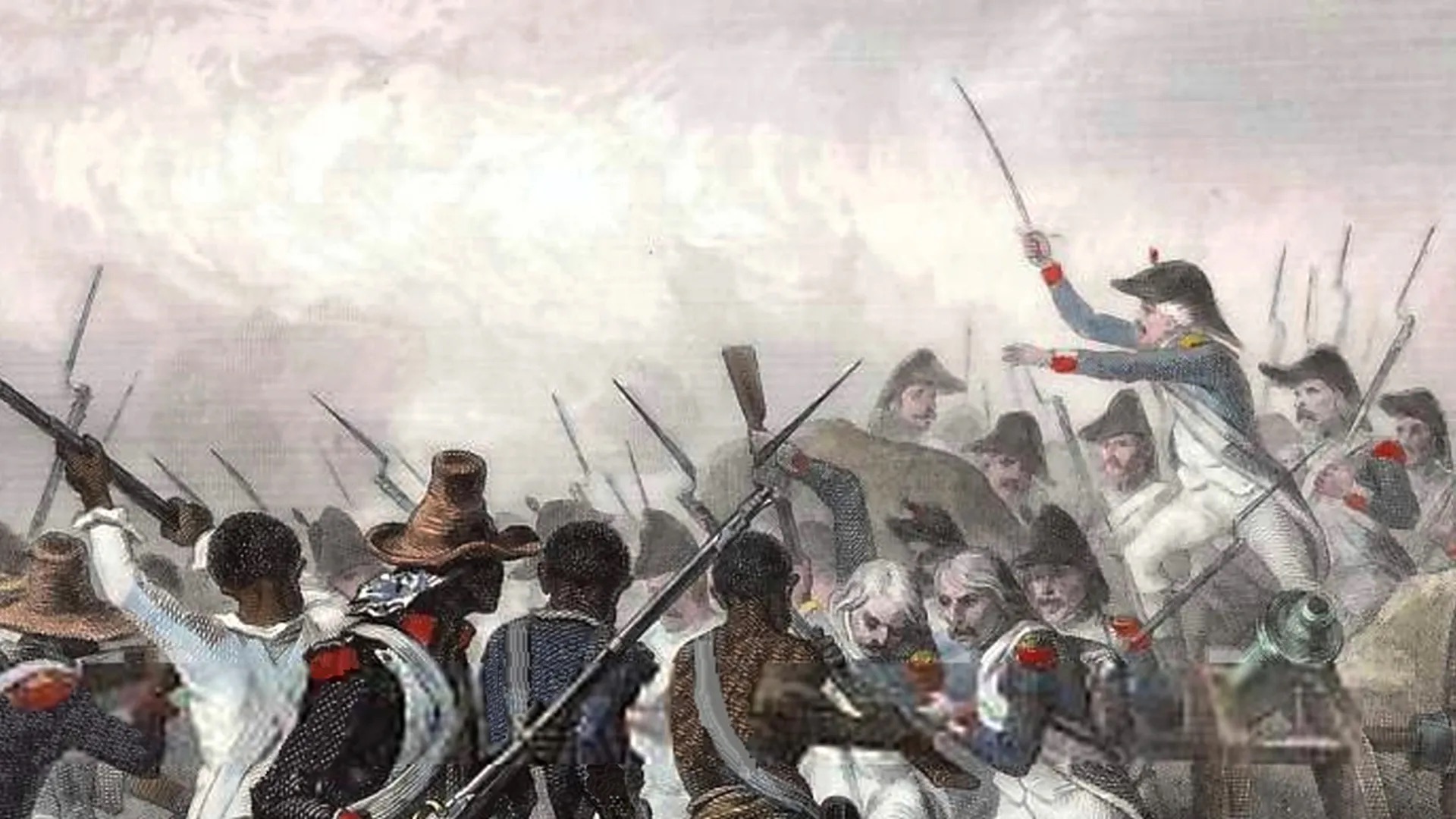
Historians have found that in the history of Atlantic slavery, the period from the 1770s to 1840s saw the most slave rebellions, and within that period, the 1790s are a moment when slave revolts peaked. In this workshop, we explore why so many of the leaders and participants in so-called slave revolts were not enslaved themselves. How sustainable is the framing of these uprisings as revolts for and by enslaved people?
We propose to reinterpret these events through the lens of the relationship between the state and subject populations. Within the tumultuous Age of Revolutions, 1795 stands out with a unique spike in slave rebellions, rupturing the Caribbean plantation economies.
David Geggus has found that several rebellions should be categorized as multi-class rebellions, in which not only the enslaved, but also others participated. While there is utility in an ever more precise categorization of events, both the slave rebellions and the multi-class rebellions share features that make it relevant to identify a common source of the breakdown of plantocratic or colonial power and the violence of those who came out in open rebellion. Many have noticed the surge in violent revolts in the late eighteenth century, and it has resulted in numerous studies of the events that unfolded in those years.
Stages in the development of capitalism, the arrival of egalitarian ideology, or the continuation of African wars have been pointed to as the cause of this period of open resistance. Much has been made of the balance between ‘creole’ and African slaves, the latter argued to be more prone to open rebellion. None of these interpretative ideas, however, seriously examine the longer developments in the relationship between the population and the state.
We invite participants to present a specific case study or comparison of cases relevant to the themes of the conference.
Our guiding questions are:
• How can rebellions and resistance in the late eighteenth- and early nineteenth-century Caribbean be reinterpreted beyond the category of “slave revolts”?
• What roles did free people of African and Indigenous descent and other non-enslaved actors play in episodes of collective resistance?
• How did changing relationships between the state and subject populations shape pathways toward rebellion?
• In what ways did infringements on formal or informal rights contribute to resistance?
• How can concepts such as (proto-)citizenship and subjecthood help us understand resistance in colonial societies?
• What methodological or archival challenges arise when studying multi-class or cross-status resistance movements?
Special issue: With the selected research papers, we aim to make journal special issue on this topic (publisher to be determined). At the conference, authors present the first draft of their articles.
Timeline:
Deadline for abstracts (1 page): 30 March 2026, please send to: negron@kitlv.nl
Deadline of research papers: 28 September 2026, please send to: negron@kitlv.nl
Date workshop: 23 October 2026.
Venue: KITLV, Herta Mohr building, room 1.30, Witte Singel 27 A, Leiden, The Netherlands.
Extra information: Participants are welcome to attend the dinner on Thursday 22 October 2026 (free of charge). Lunch and coffee/tea are provided. Unfortunately, we cannot cover travel or accommodation expenses at this time.
Contact: Ramona Negrón: negron@kitlv.nl
Leave a Reply