By Ernesto Bassi (Cornell University) and Javier Puente (Smith College)*
The Motivation
On July 7, 2020, the Department of Homeland Security announced a new rule prohibiting international students of US universities from returning to or staying in the United States if their home institutions opt for a fully remote mode of instruction this fall. In previous weeks, many universities across the country had responded to the pandemic and the most recent surge of cases by adopting a multimodal, hybrid, or sometimes entirely online educational strategy. Along with previous measures against J-1 and H1B visa seekers and holders, the announcement against international students – effectively, a student ban – constitutes another step of Donald J. Trump’s administration to promote xenophobia and racism as the cornerstones of a decaying and rotten “political” project. Should this incomprehensive and abusive measure remain in place, thousands of students may face a number of grave, even life-threatening consequences. Some will be unable to return to their home countries due to COVID policies. Others might experience detainment and deportation.
The academic strength of the United States of America, severely undermined by Donald J. Trump’s anti-intellectualism, has been historically rooted in the country’s formidable capacity as a global archive of minds, talents, and projects. At several points of its history, the United States served as a harbor for those who faced lack of opportunities in their home countries, who fled wartimes, who confronted prosecution for their ideas. Universities, the education of hundreds of thousands, and the advancement of knowledge would not have been possible without the legacy of international students and scholars. The humanities have been a beacon of liberty, tolerance, multiculturalism, integration, and have allowed for the making of a truly democratic society. History, literature, modern languages, human geography, politics, anthropology, among others fields and their virtues and contributions inside and outside the classroom are inconceivable without the enduring presence of our international colleagues.
Evidence rises against beliefs. Truth confronts hate. We, therefore, present evidence. Evidence that our fields have been and will continue to be nourished and nurtured by the astonishing contributions of international students and scholars. The following list is a succinct sample of authors whose lives and work depended, at some point, on a student visa granted by the government of the United States. These books advance our knowledge about Latin America, a region particularly problematic in the history of the USA. Such knowledge contained within the list would not have been possible without the decision of these scholars to continue their academic and personal growth in this country, and without the legally framed and constitutionally protected right to do so. All of these books are more than contributions. They have been foundational to the work of countless generations of students. They have shaped transnational conversation. Many received prestigious international awards. As much as we cannot conceive our academic fields without any of the following contributions, we also cannot contemplate a university environment without the vibrant contributions of all our current visa-holding students. The announcement of the Department of Homeland Security that threatens and targets current F1 visa holders is a threat against all international scholars, against the future pursuit of knowledge, and against the nation itself.
This list is not just a testimony of achievements and success. Instead, it should be read as a narrative of challenges and struggles. Uprooting, resettling, displacement, loss, families, friendships, and setbacks. Every single author, and everything that lies behind their names and the titles of their work, represents a world that would not have been without a visa. We present this list in the hope of avoiding a future in which new lists would be impossible to compile, in which further advancement of knowledge would come to a halt due to xenophobic policies. Both the scholars on this list and the thousands of international students currently pursuing undergraduate and graduate degrees in the United States of America have been offered invaluable opportunities. Their presence and their manifold sacrifices and contributions have transformed this country into a key site of intellectual development. We look forward to a world in which future generations of scholars include a vibrant number of international students whose names, books, and stories will eventually enlarge this list. The implementation of the student ban threatens them, their pursuits, their knowledge, and the very future of this country. Xenophobia ultimately threatens us all.
The List
This list is an ongoing project and we are happy to receive further entries by scholars whose work was made possible by an international student visa. The list is limited to monographs and it does not include edited volumes, articles, book chapters, and other countless significant contributions to the field. The list also includes only the latest book of every author. Many have multiple publications.
We will continue to accept titles and additions on an ongoing basis.
Ana Mariella Bacigalupo. University of Buffalo. Thunder Shaman: Making History with Mapuche Spirits in Chile and Patagonia. Austin: University of Texas Press, 2016.
Ernesto Bassi, Cornell University, An Aqueous Territory: Sailor Geographies and New Granada’s Transimperial Greater Caribbean World. Durham: Duke University Press, 2016.
Daniela Bleichmar. University of Southern California. Visible Empire: Botanical Expeditions and Visual Culture in the Hispanic Enlightenment. Chicago: University of Chicago Press, 2012.
Dário Borim Jr. University of Massachusetts, Dartmouth. Perplexidades: raça, sexo e outras questões sociopolíticas no discurso cultural brasileiro. Niterói, RJ: EdUFF, 2004
Alex Borucki. University of California, Irvine. From Shipmates to Soldiers: Emerging Black Identities in the Rio de la Plata. Albuquerque, NM: University of New Mexico Press, 2015.
Adriana Brodsky. Saint Mary’s College. Sephardi, Jewish, Argentine: Community and National Identity, 1880-1960. Bloomington: Indiana University Press, 2016.
Marco Cabrera Geserick. Gustavus Adolphus College. The Legacy of the Filibuster War: National Identity and Collective Memory in Central America. Lexington, 2019.
Jimena Canales. Bedeviled: A Shadow History of Demons in Science. Princeton, NJ. Princeton University Press 2020.
Marcelo Casals. Universidad Adolfo Ibáñez. La creación de la amenaza roja. Del surgimiento del anticomunismo en Chile a la “campaña del terror” de 1964. Santiago, Chile: LOM Ediciones, 2016.
Alexandre Coello de la Rosa. Universitat Pompeu Fabra. Jesuits at the Margins: Missions and Missionaries in the Marianas (1668-1769). London & New York: Routledge, 2016.
Marcos Cueto & Steven Palmer. Casa de Oswaldo Cruz. Medicine and Public Health in Latin America: A history. Cambridge: Cambridge University Press, 2016.
Alec Dawson. State University of New York at Albany. The Peyote Effect, From the Inquisition to the War on Drugs. Berkeley: University of California Press, 2018.
José Carlos de la Puente. Texas State University, San Marcos. Andean Cosmopolitans: Seeking Justice and Reward at the Spanish Royal Court. Austin: University of Texas Press, 2018.
Carlos de la Torre. University of Florida, Gainesville. Populist Seduction in Latin America. Athens: Ohio University Press, 2010.
Lina del Castillo. University of Texas at Austin. Crafting a Republic for the World: Scientific, Geographic, and Historiographic Inventions of Colombia. Lincoln: University of Nebraska Press, 2018.
Daniel Domingues. Rice University. The Atlantic Slave Trade from West Central Africa, 1780-1867. New York: Cambridge University Press, 2017.
Alcira Dueñas. The Ohio State University. Indians and Mestizos in the letter City. Reshaping Justice, Social Hierarchy and Political Culture in Colonial Peru. Boulder: University Press of Colorado, 2010.
Marcela Echeverri. Yale University. Indian and Slave Royalists in the Age of Revolution: Reform, Revolution, and Royalism in the Northern Andes, 1780–1825. New York: Cambridge University Press, 2016.
G. Antonio Espinoza. Virginia Commonwealth University. Education and the State in Modern Peru: Primary Schooling in Lima, 1821–c. 1921. New York: Palgrave-Macmillan, 2017.
Daniel Fridman. University of Texas at Austin. Freedom from Work: Embracing Financial Self-Help in the United States and Argentina. Stanford, CA: Stanford University Press, 2016.
Cécile Fromont. Yale University. The Art of Conversion: Christian Visual Culture in the Kingdom of Kongo. Chapel Hill: University of North Carolina Press, 2014.
Julia Gaffield. Georgia State University. Haitian Connections in the Atlantic World: Recognition after Revolution. Chapel Hill: University of North Carolina Press, 2015.
Pablo Gómez. University of Wisconsin, Madison. The Experiential Caribbean: Creating Knowledge and Healing in the Early Modern Atlantic. Chapel Hill, University of North Carolina Press, 2018.
Juliet Hooker. Brown University. Theorizing Race in the Americas: Douglass, Sarmiento, Du Bois, and Vasconcelos. Oxford: Oxford University Press, 2017.
Adrian Howkins. University of Bristol. Frozen Empires: An Environmental History of the Antarctic Peninsula. Oxford: Oxford University Press, 2017.
Benjamin Ibarra Sevilla. University of Texas at Austin. Mixtec Stonecutting Artistry / El arte de la cantería mixteca. Mexico City: Universidad Nacional Autonoma de Mexico, 2014.
Rafael Ioris. University of Denver. Frontiers of Development in the Amazon: Riches, Risks, and Resistances. Lexington Book, 2020.
Ieva Jusionyte. Harvard University. Threshold: Emergency Responders on the U.S.-Mexico Border. Berkeley: University of California Press, 2018.
Marjoleine Kars. University of Maryland, Baltimore County. Blood on the River: A Chronicle of Mutiny and Freedom on the Wild Coast. New York: The New Press, 2020.
Amelia M. Kiddle. University of Calgary. Mexico’s Relations with Latin America during the Cárdenas Era. Albuquerque: University of New Mexico Press, 2016.
Ana M. Klobucka. University of Massachusetts. Dartmouth. O Mundo Gay de António Botto: Ensaio. Lisboa: Sistema Solar, 2018.
Fernando Lara. University of Texas at Austin. Excepcionalidade do Modernismo Brasileiro / Excepcionalidad del Modernismo Brasileño. São Paulo: Romano Guerra Editora, 2018.
Marixa Lasso. Universidad Nacional de Colombia. Erased: The Untold History of the Panama Canal. Cambridge: Harvard University Press, 2019.
Ana María León. University of Michigan. Modernity for the Masses: Antonio Bonet’s Dreams for Buenos Aires. Austin: University of Texas Press, forthcoming 2021.
Pablo Lapegna. University of Georgia. Soybeans and Power: Genetically Modified Crops, Environmental Politics, and Social Movements in Argentina. New York: Oxford University Press, 2016.
Adrian Lerner (with Marcos Cueto). Princeton University. Indiferencias, tensiones y hechizos: entre Perú y Brasil 1889-1945. Lima: Instituto de Estudios Peruanos, 2012.
Valeria Manzano. Universidad Nacional de San Martín. The Age of Youth in Argentina: Culture, Politics, and Sexuality from Perón to Videla. University of North Carolina Press, 2014.
Cecilia Méndez. University of California, Santa Barbara. The Plebeian Republic: The Huanta Rebellion and the Making of the Peruvian State, 1820–1850. Durham: Duke University Press, 2005.
Pablo Mijangos y González. CIDE. The Lawyer of the Church: Bishop Clemente de Jesús Munguía and the Clerical Response to the Mexican Liberal Reforma. Lincoln: University of Nebraska Press, 2015.
Vanessa Mongey. Newcastle University. Rogue Revolutionaries: The Fight for Legitimacy in the Greater Caribbean. Philadelphia: University of Pennsylvania Press, forthcoming 2020.
Jeppe Mulich. University of Cambridge. In a Sea of Empires. Networks and Crossings in the Revolutionary Caribbean. Cambridge: Cambridge University Press, 2020.
Juan Manuel Palacio. Universidad de San Martín. La justicia peronista. La construcción de un nuevo orden legal en la Argentina, 1943-1955. Buenos Aires: Siglo XXI, 2018.
Ben Nobbs-Thiessen. Landscape of Migration: Mobility and Environmental Change on Bolivia’s Tropical Frontier, 1952 to the Present. Chapel Hill: University of North Carolina Press, 2020.
Pablo Palomino. Emory University. The Invention of Latin American Music: A Transnational History. Oxford: Oxford University Press, 2020.
Edgardo Pérez Morales. University of Southern California. No Limits to Their Sway: Cartagena’s Privateers & the Masterless Caribbean in the Age of Revolutions. Nashville: Vanderbilt University Press, 2018.
Pablo Piccato. Columbia University. A History of Infamy: Crime, Truth, and Justice in Mexico. University of California Press, 2017.
Christian Pinnen. Mississippi College. Complexion of Empire in Natchez: Race and Slavery in the Mississippi Borderlands. Athens: University of Georgia Press, 2021.
Mariano Plotkin. CONICET & Universidad Nacional Tres de Febrero. Freud in the Pampas: The Formation of a Psychoanalytic Culture in Argentina, 1910-1983. Stanford: Stanford University Press, 2001.
Juan José Ponce Vásquez. The University of Alabama. Islanders and Empire: Smuggling and Political Defiance in Hispaniola, 1580-1690. Cambridge: Cambridge University Press, forthcoming 2020.
Fabricio Prado. The College of William and Mary, Edge of Empire: Atlantic Networks and Revolution in Bourbon Río de la Plata. Berkeley: University of California Press, 2018.
Karen Racine. University of Guelph. Francisco de Miranda: A Transatlantic Life in the Age of Revolution 1750-1816. Wilmington DE: Scholarly Resources, 2002.
Thomas Rath. University College, London. Myths of Demilitarisation in Postrevolutionary Mexico. Chapel Hill: University of North Carolina Press, 2013.
David Rex Galindo. Universidad Adolfo Ibáñez. To Sin No More: Franciscans and Conversion in the Hispanic World, 1683-1830. Stanford: Stanford University Press, 2018.
Ignacio Sánchez Prado. Washington University in St. Louis. Strategic Occidentalism. On Mexican Fiction, the Neoliberal Book Market and the Question of World Literature. Evanston, IL: Northwestern University Press, 2018.
Anna Schaposchnik. DePaul University. The Lima Inquisition: The Plight of Crypto-Jews in Seventeenth Century Peru. Madison, University of Wisconsin Press, 2015.
Ernesto Semán. University of Bergen. Ambassadors of the Working Class: Argentina’s International Labor Activists and Cold War Democracy in the Americas. Durham: Duke University Press, 2017.
Sergio Serulnikov. Universidad de San Andrés. Revolution in the Andes. The Era of Túpac Amaru. Durham: Duke University Press, 2013.
Cristina Soriano, Villanova University, Tides of Revolution: Information, Insurgencies, and The Crisis of Colonial Rule in Venezuela. Albuquerque: University of New Mexico Press, Diálogos Series, 2018.
Daviken Studnicki-Gizbert. McGill University. A Nation upon the Ocean Sea: Portugal’s Atlantic Diaspora and the Crisis of the Spanish Empire, 1492–1640. Oxford: Oxford University Press, 2007.
David Tavárez. Vassar College. The Invisible War: Indigenous Devotions, Discipline, and Dissent in Colonial Mexico. Stanford: Stanford University Press, 2011.
Mauricio Tenorio. University of Chicago. Clio’s Laws: On History and Language. Austin: University of Texas Press, 2019.
Camilo D. Trumper. University at Buffalo. Ephemeral Histories: Public Art, Politics, and the Struggle for the Streets in Chile. University of California Press, 2016.
Alejandro Velasco. New York University. Barrio Rising: Urban Popular Politics and the Making of Modern Venezuela. Berkeley: University of California Press, 2015.
Angela Vergara. California State University, Los Angeles. Copper Workers, International Business, and Domestic Politics in Cold War Chile. University Park: Pennsylvania University Press, 2008.
Ezer Vierba. Harvard University. The Singer’s Needle: An Undisciplined History of Panama. Chicago: University of Chicago Press, forthcoming 2020.
Daniel Noemi Voionmaa. Northeastern University. En tiempo fugitivo: Narrativas latinoamericanas contemporáneas. Santiago: Universidad Alberto Hurtado UP, 2016.
Louise Walker. Northeastern University. Waking from the Dream: Mexico’s Middle Classes after 1968. Stanford: Stanford University Press, 2013.
Kirsten Weld. Harvard University. Paper Cadavers: The Archives of Dictatorship in Guatemala. Durham: Duke University Press, 2014.

Map 1. Geographic coverage of books on Latin America published by international scholars. The Atlantic Ocean corresponds to the “Atlantic World” subfield. The Pacific Ocean corresponds to the “Transnational” subfield, broadly defined.
Were you once or are you currently an international student in the United States? Did you benefit from an F-1 or J-1 visa? If so, please share your story in the comments.
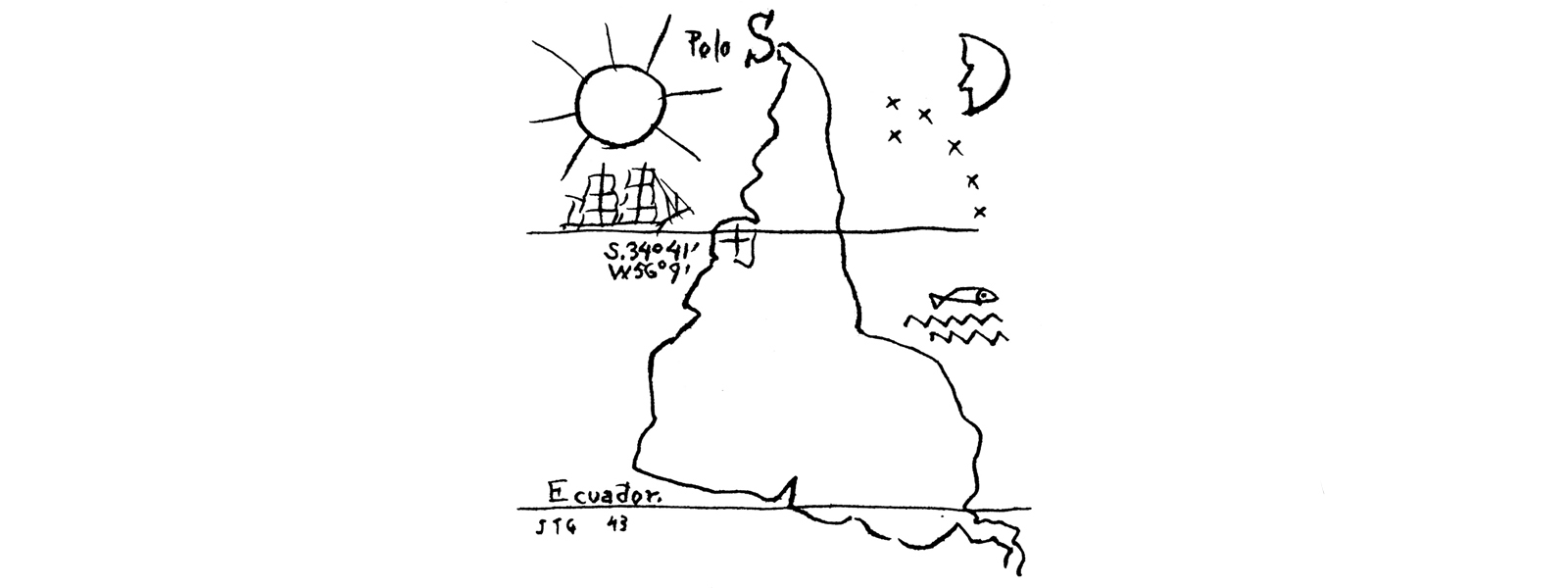
Title image: Joaquín Torres García, América Invertida, 1943.
* We thank the many #twitterstorians, off-twitter historians, and scholars who responded to our call and spread the word, helping us reach many of our international colleagues whom we would have been unable to identify. We are especially thankful to all the international scholars (both those who are now US citizens and those who, like us, remain “aliens”) whose work appears on this bibliography. You have enriched the historiographical map and the historical profession. Special thanks to Yoshy Luengo for the map.


Leave a Reply to Michael RomCancel reply