By Farzeen Nasri
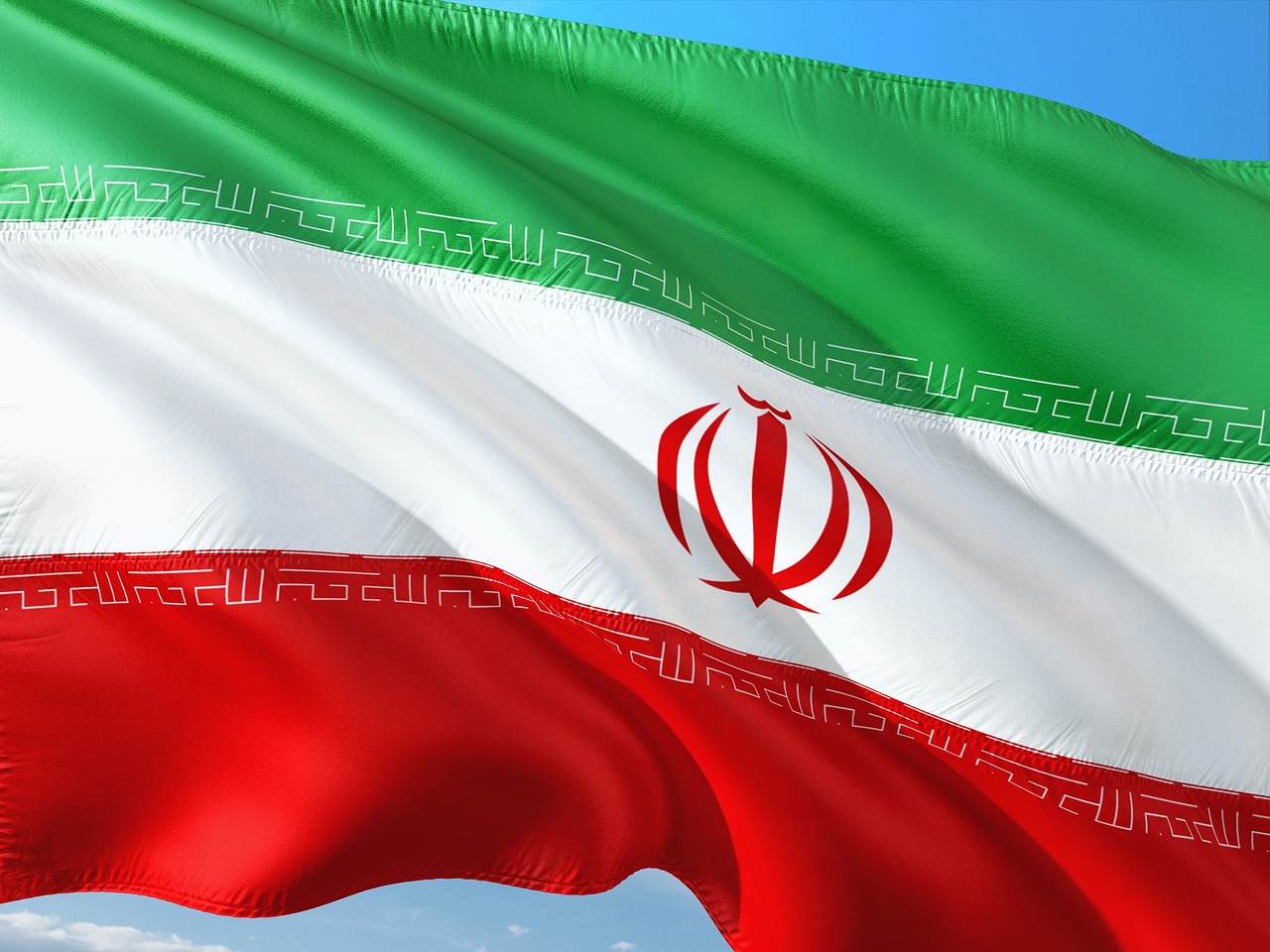
As Iran stands at a pivotal moment in its history, the prospect of revolution appears increasingly imminent. Widespread dissatisfaction with political repression, economic stagnation, foreign policy setbacks, and social inequities has fueled an unprecedented wave of protests, drawing together diverse segments of society. Women advocating for greater freedoms, alongside workers, farmers, merchants, youth, retirees, cultural elites, and even some clerics, have united in their calls for change. Disillusionment with the ruling regime has reached a critical threshold, and this moment is marked by a confluence of factors that could catalyze a revolutionary transformation. This article examines the dynamics of this potential revolution, the forces propelling it, and the key triggers that may shape its course.
Read more: Is a Revolution in Iran on the Horizon?Revolutions have been understood in different ways, but two primary definitions are particularly relevant. One views a revolution as “a movement that brings about the (violent) overthrow of a government,” which leads to significant social and political changes.[1] The other defines it as a radical shift in political order, where one system is replaced by another.[2] The question of whether revolutions can be predicted has been widely debated, particularly between scholars such as Jack Goldstone and Nikki Keddie. Their conclusion is that while revolutions cannot be predicted, their causes can be analyzed in hindsight. [3] This essay, therefore, does not attempt to predict when or how a revolution will unfold in Iran, but rather aims to identify the key factors that have historically contributed to revolutions and examine whether these factors are present in contemporary Iran.
Scholars have long studied the causes of revolutions, agreeing that they typically arise from a combination of several conditions. Goldstone, et al., in Revolutions of the Late Twentieth Century outline three major factors that increase the likelihood of a revolution. First, the state must lose its ability to control resources and maintain authority. Second, regime elites must turn away from the state and engage in conflict over power. Third, a strategic portion of the people must be able to mobilize for protest. When these factors are strong and present together, they warn, a volatile environment is created, where a small trigger can ignite widespread upheaval.
Iran today reflects many of these conditions. The state has lost significant control over resources, struggling to address both internal and external challenges. According to Transparency International, Iran is one of the most corrupt countries, plagued by systemic inefficiencies and political patronage. Key sectors of the economy are dominated by the Islamic Revolutionary Guard Corps (IRGC) and religious foundations, which often stifle competition and hinder economic growth. For example, despite possessing the world’s second-largest natural gas and third-largest oil reserves, Iran needs to import gasoline and impose daily national power and natural gas cuts due to inadequate investment and mismanagement. Sanctions have further worsened the situation, substantially reducing Iran’s oil exports, and forcing it to sell oil at prices 30-50% below market value, further reducing badly needed government resources.[4] All this has resulted in little investment by domestic and foreign investors, seriously affecting economic output.
Even President Pezeshkian admitted in interviews, on December 3-4, 2024, that the government is facing major economic problems and a lack of resources in the budget to pay promised subsidies, and what it owes to farmers, workers, retirees, and even its own personnel. He warned that the situation is not sustainable and that under the present conditions the regime may fall. Just this month, the government had to illegally take $5.8 billion from the National Development Fund, which was created to save part of the oil revenue for future generations.[5]
The Iranian economy is also grappling with more than 40% inflation,[6] compounded by the Iranian rial becoming the world’s weakest currency^8 and further devaluing as we speak. Unemployment stands at 9-10%, but the situation is particularly dire for younger people, particularly women. Al Jazeera reported in 2023 that over 150,000 Iranians leave the country every year, many of whom are highly educated. This brain drain depletes the country of vital human capital, leading to lower output, especially in critical sectors like oil, something that Ghalibaf, the speaker of the parliament, referred to recently with heightened alarm.
In addition to these economic struggles, there are signs of political fragmentation within Iran’s leadership. Although Supreme Leader Ayatollah Khamenei’s rule appears stable, significant tensions exist within the regime. Khamenei’s age and health issues, along with the question of his successor, contribute to uncertainty. His son, Mojtaba, is being promoted as a potential successor, but this is controversial within the regime. The hardliners, primarily represented by the IRGC and the Resistance Front, often clash with more moderate factions within the political elite, such as the president. There is also a major rift between the older and the younger members of the IRGC, with the latter accusing high-level IRGC officials of graft and disloyalty.[8] These internal divisions, exacerbated by economic decline and dismal effectiveness of Hezbollah, Hamas, and now the collapse of the Assad regime in Syria – Iran’s most important regional ally – as well as Iran’s own defensive failure against Israeli military attacks, have fostered a blame game within the regime as to who should be held responsible for such failures, having spent hundreds of billions of dollars for this purpose. The IRGC’s dominance over the regular armed forces is another source of resentment. Important also is that, excluding the high-level military officials, the families of regular military personnel share the same economic problems as the public.
Religious leadership, once central to the regime’s legitimacy, is also increasingly alienated. Many clerics, especially in Qom, feel sidelined as the government increasingly relies on religious justifications without engaging with religious authorities. Moreover, Iran’s youth, especially those born after the 1979 revolution, are becoming more secular and less inclined to subscribe to the regime’s religious ideologies. These developments further undermine the regime’s foundation. The regime-promoted rapid increase in population is also a cause of revolutionary crises.[9]
Another sign of the regime’s weakening grip on power is its strained relationship with intellectuals and cultural elites, both domestically and abroad. Public dissent is severely repressed, but many intellectuals continue to criticize the government, mostly from exile, despite the regime’s attempts to silence them through harassment and assassination plots. These actions indicate the regime’s growing fear of intellectual opposition. The loss of support from intellectuals, many of whom played pivotal roles in pre-revolutionary movements, signals a broader disconnect between the state and segments of society that historically pushed for change.
The widespread dissatisfaction among the Iranian population is another contributing factor to the potential for revolution. Economic struggles, political repression, and social inequality have left large sections of society disillusioned. More than 90% of Iranians today express dissatisfaction or hopelessness.[10] Inflation and unemployment have dramatically worsened conditions for workers, farmers, and the urban middle class, driving protests. Women, facing discrimination in both the political and economic spheres, have become more vocal in their opposition to government policies, particularly those regarding mandatory hijab. The youth, who make up about 40% of the population – and are considered a core component of any revolutionary movement – are similarly frustrated by limited social freedoms and economic opportunities, leading to growing discontent.
Despite these signs of widespread dissatisfaction, the path to revolution requires more than just collective grievances. There needs to be a unifying ideology and leadership capable of bringing disparate groups together. However, as economic, social, and domestic and foreign political conditions worsen, as Iran’s natural resources are seriously depleted, and as the future looks even gloomier, the potential for unity under a revolutionary ideology and a transitional leader increases. In addition, the “Woman, Life, Freedom” movement can be considered a rehearsal for a broader protest, benefiting from expanding demonstrations by workers, farmers, nurses, retirees, teachers, students, and others – something that did not exist two years ago.
In conclusion, Iran’s current conditions mirror many of the factors that have historically led to revolutions. While it is impossible to predict exactly when or how a revolution might unfold, these underlying factors suggest that Iran is approaching a tipping point. The combination of economic hardship, political alienation, and the growing mobilization of disaffected groups have created a volatile environment. Under these conditions, small triggers could easily lead to widespread upheaval.
Looking ahead, several international and domestic issues could serve as potential triggers for escalating tensions. Internationally, pressures such as Britain, France, and Germany’s readiness to activate the “snapback” provision of the Iran nuclear deal—reimposing UN Security Council sanctions on Iran—due to concerns over Iran’s nuclear program and its military support for Russia, as well as President-elect Trump’s threat to impose maximum pressure on Iran, could significantly heighten instability. Additionally, the emerging alignment between Europe and the US on Iran’s nuclear and missile programs may further exacerbate the situation.
Domestically, decisions such as the recently adopted, stricter hijab law—challenged on both constitutional and religious grounds—and deemed unenforceable by the president [11] could fuel further discontent. Other potential flashpoints include the planned increase in gasoline prices (which contributed to major unrest in 2019), and the proposed 200% hike in security forces’ budget allocations. This increase would enable the Iranian government to provide significant subsidies to Lebanese families, while imposing additional taxes on an already burdened population. [12]
As the government’s failure to meet its citizens’ needs becomes increasingly apparent, its foreign military policy falters, and the regime’s legitimacy is continually questioned, the potential for revolution grows. Two new developments should further concern the regime in Iran. First is the government’s decision to delay the new law on women’s dress code, out of the fear of mass protests similar to what happened in 2022. Alexis de Tocqueville emphasized that such compromises in the face of a revolutionary situation will be considered a sign of weakness, speeding up the collapse of the old regime. Second is the apparent decision to incorporate Assad’s military and government employees, excluding those who have committed major crimes, into the emerging Syrian regime. This also may have substantial impact on the loyalty of the Iranian security forces, who realize that by abandoning the Iranian regime – rather than committing crimes against the demonstrators – they could possibly secure a better future for themselves and their families.
Farzeen Nasri is professor and research scholar in International Political Economy at the Graduate School of Global and International Studies, University of Salamanca, Spain, and emeritus professor of political science and economics at Ventura College. Nasri holds a Master’s in International Economics from Tehran University, a Master’s in International Relations, and a Ph.D. in Political Science from New York University and The New School. He is the author of The European Community and the Third World and has published articles, review articles, and book reviews in journals such as The American Political Science Review, World Politics, and The Middle East Journal. He has presented, among others, at Oxford University, The Cincinnati Council on World Affairs, and the Aspen Institute.
Endnotes:
- Nikki R. Keddie, ed., Debating Revolutions (New York: Routledge, 1995), xi.
- Said Amir Arjomand, Revolution (The University of Chicago Press, 2019), 14.
- “Reply to Keddie,” Keddie, ibid, 77.
- “Iran’s Economic Crisis,” The Economist, October 19, 2024, 62.
- “Pezeshkian on Iran’s Economic Crisis,” Iran International, September 2, 2024.
- World Bank, “Iran’s Economic Outlook,” 2023.
- “The World’s Weakest Currency: Iranian Rial,” Forbes Advisor, 2024.
- Saeid Golkar and Kasra Aarabi, “The Brewing War With Israel Is Boosting Iran’s Young Hard-Liners,” Foreign Affairs, October 11, 2024.
- Jack Goldstone, “Population Growth and Revolutionary Crises,” in Theorizing Revolutions, ed. T. Smith (Cambridge: Cambridge University Press, 1997).
- Karim Sadjadpour, “The New Battle for the Middle East,” Foreign Affairs, November/December 2024, 89.
- “Hijab Law Controversy,” Financial Times, December 10, 2024.
- “Security Forces Budget Increase,” Iran International, October 29, 2024.

Leave a Reply