By Catherine Fletcher

The title The Firearm Revolution arose from my observation that guns got significantly less attention in the scholarly literature than the parallel “print revolution”. In the sixteenth and seventeenth centuries, gunpowder was frequently cited alongside print as an important new technology. In contrast, modern considerations of the “gunpowder revolution” tended to confine it to a military sphere. The scholarly literature on small arms is diffuse, divided between military histories, histories of violence, and works aimed at curators and connoisseurs. Guns, however, offer a prism through which we can view key aspects of state formation that are often dealt with separately: the development of the military state with its concern for defense on the one hand, of the disciplining state with its concern for social order on the other, and of the associated “civilizing process.”
The idea of the military state emerged from a long-running debate about whether there was a military revolution in Europe.[1] That debate began in the 1950s, when Michael Roberts made the case that the tactical innovations of warfare between 1560 and 1660 led to a growth in the authority of the state, especially in relation to tax-raising. Subsequent debate focused not so much on whether there had been a military revolution but on its timing, with contributors highlighting the significance of both earlier and later developments.[2] In the 1990s, Clifford Rogers attempted to bring together the wider scholarship with the concept of “punctuated equilibrium”, in which the development of the state was characterized by a “series of intense revolutionary episodes” within a longer evolutionary process.[3] Emphasizing the concept of evolution more strongly yet, some twenty years later Frank Jacob and Gilmar Visoni-Alonzo argued for the abandonment of the military revolution concept altogether. In light of newer scholarship on global history, they particularly criticized the idea that a distinctly western European military revolution had enabled the continent’s powers to build their global empires, pointing out that the new methods were not widely used in overseas conquest and that, in any case, military development was well advanced elsewhere in the world.[4]
Even while scholars question the concept of a military revolution, some concepts from this literature remain useful, especially those relating to the two sides of the state: the fiscal state, whose need for a standing army motivates its efforts in tax-raising, and the contractor state, which purchases services. Moreover, there does not need to have been a military revolution for there to have been a “firearm revolution.”. Handguns matter precisely because they escaped the military sphere. Their use expanded over decades and persisted over centuries, as did the debates about how to manage them. Like print, handguns changed human relations. If we can speak of a print revolution in early modern Europe, then we can speak of a firearm revolution too.
The Firearm Revolution brings the literature on the military aspects of the state into dialogue with discussions of the role of government in the maintenance of social order. If defense was one challenge for the early modern state, addressing crime and disorder was another. I approach the military revolution debate side-on, taking one of its components—the rise of small arms—and assessing its impact on society at large. Beginning with the original, military, function of handguns, I identify the processes through which, despite initial suspicion, they came to be familiar objects in western Europe. The proliferation of guns via militia service made them accessible for use in farming, but also by bandits. Rising crime led to demands to carry guns for self-defense, and although their usefulness for self-defense was questioned, by the time that debate arose they were entrenched as a technology. Their producers had a direct interest in continuing to make them, and the many ancillary industries had an interest in their continued use too. Governments, meanwhile, were concerned to ensure they had adequate capacity to increase production in the all too likely event of war. These intertwined processes, together with a growing cultural acceptance of handguns, together made for a firearm revolution that left western Europe with a lethally armed citizenry and normalized the new technology.
Moreover, thinking about a firearm revolution in this way gives us a holistic perspective on the early modern state. The production of handguns for military use, and the training of shooters, is an important aspect of their history, but it is far from being the only aspect. If, as Robert Barret observed in 1598, “the wars are much altered since the fierie weapons first came vp”, so too was life beyond.[5] Guns had non-military uses: for livestock control and hunting, and for personal protection. Given the lethality of these weapons, they raised concerns about social order, confirmed by their use in robbery and assassination. They also had a significant role to play in the process of imperial expansion, and the trade in gunpowder weapons was soon a matter of international diplomacy. Finally, and perhaps most importantly, they changed relationships between human beings. As Bruno LaTour observed, “You are different with a gun in your hand”.[6] With guns, there could be gunmen: the possibility of killing that guns represented made for a revolutionary change in human relations.
Catherine Fletcher is the author of The Firearm Revolution: From Renaissance Italy to the European Empires (Princeton University Press, 2026),from which this post is adapted. She is Professor of History at Manchester Metropolitan University (UK) and the author of several previous books on early modern Europe, especially Italy. Catherine is committed to bringing her research to wider audiences through broadcasting and public writing.
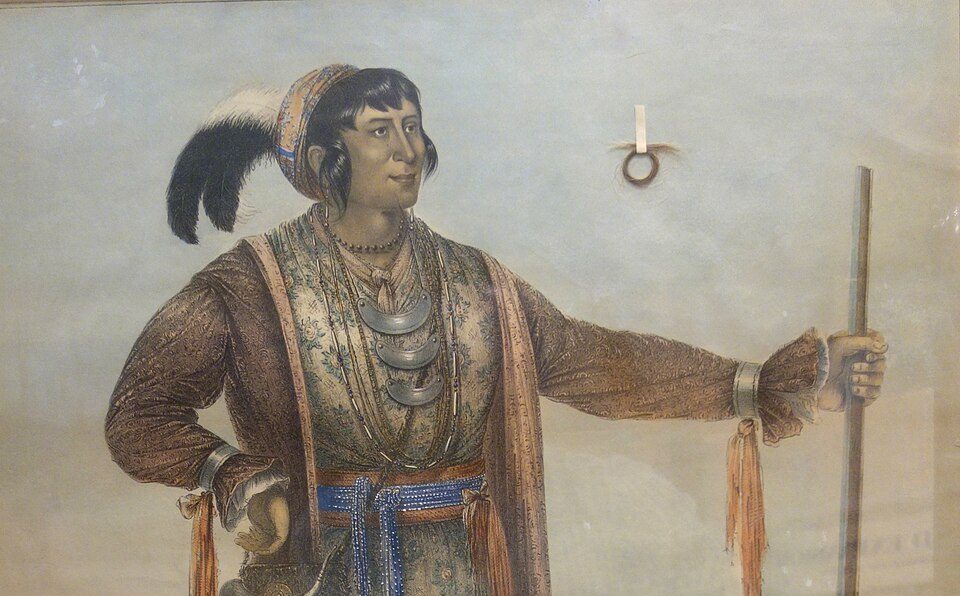
Title Image: Chief Osceola with Rifle by George Cadin. Source: Wikimedia Commons

Endnotes:
[1]. Clifford J. Rogers (ed.), The Military Revolution Debate (Westview Press, 1995), provides a compilation of key readings; see also David Eltis, The Military Revolution in Sixteenth-Century Europe (Tauris, 1998).
[2]. See, for example, chs. 3 (Rogers on the Hundred Years War) and 4 (Jeremy Black on the 1660–1792 period) in Rogers, Military Revolution Debate, and, on gunpowder weaponry, B. S. Hall, Weapons and Warfare in Renaissance Europe: Gunpowder Technology and Tactics (Johns Hopkins University Press, 1997).
[3]. Rogers, Military Revolution Debate, intro. and ch. 3.
[4]. Frank Jacob and Gilmar Visoni-Alonzo, The Military Revolution in Early Modern Europe: A Revision (Palgrave, 2016).
[5]. Robert Barret, The Theorike and Practike of Moderne Warres (William Ponsonby, 1598), 2.
[6]. Bruno LaTour, Pandora”s Hope: Essays on the Reality of Science Studies (Harvard University Press, 1999), 179.
Leave a Reply