By Chris M. Blakley
This post is a part of the 2026 Selected Papers of the Consortium on the Revolutionary Era, which were edited and compiled by members of the CRE’s board alongside editors at Age of Revolutions.
For eighteen long months she suffered pains in her abdomen that began in 1785.[1] Throughout those eighteen months, she felt “troubled with, and exhausted by a diarrhea” that wore her body out from dehydration and nutrient malabsorption. Perhaps other enslaved women noticed her “severe and acute pains” as they labored alongside her. Dr. Theodorick Bland––a slaveholder, alumni of the University of Pennsylvania and Edinburgh University, and elected representative of the Virginia Convention of 1788 and the First United States Congress––arrived to examine her somewhere near Amelia County, Virginia. He observed her pulse, emaciated state, and the “scirrhous ovarium”––a malignant ovarian tumor––that formed alongside the peritoneum, the lining of the abdominal cavity.[2] She believed herself pregnant and emphasized her state to the doctor. Bland did nothing to ease her pain, alleviate the diarrhea, or relieve this woman of the tumor. Instead, he waited. After four months, and her death, he quietly requested “to open her.”[3]
Doctors like Bland used post-mortem examinations to further their own medical authority as experts. On his own plantation, Cawsons, in Prince George County, Bland likely witnessed or even aided enslaved women––such as Rose, Nancy, Sukey, Liddy, Betty, Great Hannah, or Mima––either during childbirth or while suffering from other illnesses.[4] While performing this examination, he found the enlarged ovarian tumor, noted its “darkish blue” color, and how it had spread to the woman’s colon, ileum, and mesentery. Cutting through her intestines, he found “the bones of a foetus” deep within her “preternatural uterus.”[5]
For early modern anatomists, preternatural referred to anatomical abnormalities believed to be “beyond nature.”[6] Lorraine Daston explains that the emergence of the preternatural concept in early modern science “expanded the range of explanations as well as that of objects to be explained” among natural philosophers.[7] Daston further connects the preternatural to two other epistemic categories that flourished in the early modern: the marvelous and the monstrous. Wielding his surgical knife, he removed the cranium, preserved it in spirits, and proceeded to have “shown it to many.” The doctor’s theatrical manipulation of human remains added to his own credit and status as a learned physician and constituted a performance of containing the monstrous.[8]
The contrast between this woman’s abandonment and ignored pain against this man’s triumphant gynecological achievement can be understood within the Mothers of Gynecology archive. Anarcha Westcott, Lucy Zimmerman, and Betsey Harris are well-known as the Mothers of Gynecology due to the pathbreaking scholarship of women like Deirdre Cooper Owens, Dorothy Roberts, and Harriet A. Washington.[9] All three survived multiple medical experiments conducted by J. Marion Sims to repair vaginal and rectal fistulas in the 1840s and 1850s. So too did Ann McRee, Delia, Lavinia Boudurant, and Julia McDuffie.[10] Sims, and others such as Thomas Hamilton, experimented on enslaved people, “never caring”, in the words of an enslaved man named Fed, for the pain their curiosity inflicted.[11] Sims’ experimental surgical procedures intended to support the capitalization of Black women’s wombs under racial capitalism, while Hamilton’s research justified Black people’s exposure to exhaustion and overwork.[12]
The historiography of slavery, science, and emotions is a growing field, and this essay aims to make one contribution toward this by examining the expression and suppression of emotions among enslaved patients in gynecology and obstetrics from the Revolutionary War era to the Market Revolution.[13] Dannelle Gutarra Cordero shows how Enlightenment philosophers developed racialized hierarchies that categorized people of African descent as emotionally excessive and primitive.[14] Moreover, Erin Austin Dwyer likewise shows that physicians and slaveholders alike aimed to display mastery as an emotional performance, expressing their authority as stoic rationality opposed to the allegedly irrational fears of the enslaved.[15] In addition, Beth R. Wilson explains that enslaved women’s love and grief felt during family separations actively staged “the power of mother–child bonds, and the uniquely inhumane nature” of slave sales.”[16] More recently, Xavier Reader has shown that enslaved women, men, and queer people expressed forms of romantic love that transcended the heteronormativity of the antebellum era.[17]
My intent here is to contribute to this foundational research and widen the horizon of how we understand the Mothers of Gynecology archive within the context of the history of emotions. Using clinical case reports as emotional scripts of professional rationality, early American physicians systematically suppressed empathy for enslaved women, transforming their physical trauma into a site of mechanical problem-solving that normalized a racialized hierarchy of feeling and legitimized medical authority under plantation capitalism.[18]
Physicians across the American South remarked on incidents of imperforate hymen and labia fusion among enslaved women. Cases from 1783 and 1795 appeared in The Medical Repository discussing “a disease peculiar to the female children of Negro Slaves.”[19] A doctor from Harford County, Maryland, reported on a thirty-nine-year-old enslaved woman. This woman’s first husband “left her” after fifteen years of marriage and “declared she was no woman.”[20] Several years later, after remarrying, she became pregnant. While in labor, she informed her enslaver that “there was no passage” for the fetus to be born. The doctor confirmed that the woman’s labia interna were “firmly united, so as to close the vagina” except for a small opening near the perineum. With a “director” and “crooked bistory”, the doctor pried open the labia, and the child “was born without any difficulty.”[21] Of the mother: “She soon recovered, and I never heard any more complaint,” reported the doctor. The doctor’s report attested to his own skill at gynecology and successfully managing the emotions of his patients.
In the second case, involving a younger girl, the doctor likewise arrived as the patient began labor. Unlike the prior case, the doctor forewent the use of a knife and instead used the “forcible pressure” of his hands to guide the head of the child.[22] In the remaining text of the case, the doctor argued that Black girls and women suffered labial adhesions and “are more liable to have an inflammation of the internal labia than” White patients, “not because they are blacks, but from the occupation of the mothers, who have not time from their daily labour” to adequately care for their children.[23] The doctor hypothesized that infant Black girls urinated while their mothers toiled, and that over the course of the day the “slime becomes so acrid that the labia interna and contiguous parts become inflamed, and being kept constantly in contact, they unite and from frequent inflammations, are rendered thick and callous.” Moreover, it is very likely that chafing from the rough texture of “negro cloth” and osnaburg twill led to repetitive tissue trauma and adhesion.[24] The doctor’s conclusions here, that poor sanitation rather than race led to this painful problem, is a remarkable example of medical sympathy for enslaved people.[25]
In a case from St. Thomas in the Vale, Jamaica, published in 1805, George Clark reported how a young Igbo woman, estimated to be eighteen or nineteen years old, went into labor on a Sunday morning.[26] Her early labor pains were mild, causing her to delay seeking assistance until the evening. When a local Black midwife finally examined her, she discovered a striking anatomical obstruction: “the vagina impervious so as not to admit the point of the finger on account of the pressure occasioned by a large tumor in the perinæum.”[27] Additionally, the practitioner observed that the “anus was considerably dilated and there flowed from it a quantity of blood and mucus.”
By the following afternoon, at half-past two, Clark arrived to evaluate the patient. He found her stable, with a good pulse and relatively undiminished strength, but noted that the perineal tumor had grown very large. Upon performing a rectal examination, Clark made a remarkable discovery: “On introducing my finger I plainly felt the hairy scalp denuded.” The patient also suffered severely from urinary retention, having passed no urine since the onset of labor. Clark noted that even if he had possessed a catheter, he was “confident I could not have introduced it, the tumour had so completely shut up the os externum.”
Recognizing the critical nature of the situation, Clark initiated treatment with fomentations and warm oil frictions, which soon prompted strong contractions. To facilitate the delivery, he managed to “gradually dilated the sphincter ani so as that I got my whole hand into the rectum.” By hooking his finger into the fetus’s mouth, he successfully “extracted the head per anum.” A subsequent contraction delivered the rest of the body and the placenta entirely. Remarkably, Clark noted there was “scarcely any laceration of the sphincter, the perinæum was not in the least injured,” and blood loss was normal.[28] The infant appeared to be a seven-month fetus that had likely died at the beginning of labor.
The patient’s postpartum recovery carried complications but ultimately ended in survival. Though she initially showed signs of healing, and her anus contracted back to its natural size, a subsequent evaluation by Clark and his partner, Dr. Hunter revealed that “the anus and perinæum in a sloughy mortified state.” Despite this localized tissue necrosis, “on strict examination no communication could be found between the vagina and rectum.” By the ninth day following the delivery, the mortified external tissues began to heal, though the “perinæum had sloughed and the furcha was destroyed.” Ultimately, the patient made a full recovery, with Clark concluding his report by noting that “there are lately some signs of her being again pregnant.”[29]
Using a theory of racialized feelings, this case reveals a colonial emotional hierarchy: the woman’s agony, terror, and violation are entirely absent from the record, while Clark’s clinical detachment, surgical triumph, and intellectual curiosity are foregrounded as the only legitimate emotions.[30] Her pain holds no moral weight; her body is a site of problem-solving. In Clark’s case study and her enslaver’s account, her survival matters only as future fertility—“signs of her being again pregnant.” As a narrative within the history of emotions and medicine, the case report itself functions as an emotional script. Its objectivity is a performance of professional rationality that suppresses empathy for the enslaved patient. By juxtaposing this woman’s “sloughy mortified” perineum with calm clinical notation, the text normalizes a racialized economy of feeling: Black female suffering requires no emotional response beyond intervention. Medicine on the plantation thus trained practitioners to feel differently about Black pain, making emotional hierarchy a prerequisite for racialized medical authority.
In 1809 Dr. Pierre Chatard, of Baltimore, Maryland, published a case of a ruptured uterus that provides an illustration of how enslaved Black women’s bodies were treated not as respectable patients, but as a site for surgical performance and pathological display.[31] Chatard introduced the case by lamenting that “prejudice” prevented him from gathering more details. What precisely is prejudicial about the case is unclear and perhaps functioned as an exculpatory gesture to deflect any questions surrounding Chatard’s diagnostic failures.
Chatard immediately established the patient as anatomically abnormal, noting her size was so diminutive she “would have been taken for a child instead of an adult,” framing her body as a preternatural object of medical curiosity, much like the “preternatural uterus” documented in the Amelia County case. Moreover, the doctor related that twelve years prior she “delivered alone” a stillbirth.[32] This woman survived the trauma of unassisted labor, compounded by grief and the feeling of anguish due to delivering a dead child. This lonely event constituted an experience of loss without the social or medical support afforded to wealthier White mothers, and she had to resume labor for the enslaver without rest. The cold, clinical observation by Dr. Chatard that she “delivered alone” expunged the event of its emotional cost, transforming a moment of despair into a quotidian comment.[33] This initial objectification justified the series of aggressive, escalating interventions that followed, which ultimately led to this woman’s premature death.
Despite the midwife’s fifteen hours of experience and clear warnings about the patient’s weak pulse, ineffective pains, and the rigid, elevated belly, Chatard’s proceeded with a violent escalation of tactics. His repeated, unsuccessful attempts to use the forceps—a maneuver he noted was performed with “all possible tenderness,” later added in his published narrative as performative care for his reading audience—gave way to an increasingly destructive approach.[34] He used a forceps blade as a lever to shove the fetal head toward the iliac fossa, a desperate act that completed the catastrophic uterine rupture. It was only after this maneuver, when he discovered a fetal foot where the head had been, that the true nature of the pathology—the displacement of the fetus into the abdominal cavity—should have become undeniable. Yet, overcome by his focus on mechanical delivery, Chatard’s clung to the false hypothesis of twins. His eventual discovery, when the fetal head was retrieved piecemeal––losing the jaw with ease due to putrefaction––and the intestines had prolapsed into the vagina, only came after the body had been irreparably damaged.
The final moments of the case reveal the function of the medical gaze in the archive of slavery: the pursuit of authoritative knowledge. The patient died within hours, and the ensuing conflict over her remains crystallizes the politics of medical racism and bodily autonomy under slavery. While her enslaver, “Mr. W,” “very obligingly” granted permission for an autopsy, her husband and relatives opposed the procedure.[35] This resistance, quietly recorded in Chatard’s notes, represents a crucial point of community autonomy and a profound claim to the patient’s bodily integrity and dignity after death. Dr. Chatard’s, however, concluded the report by mourning only the missed opportunity to further his own career and acquire “more interesting details,” thus asserting the emotional hierarchy where the enslaved Black woman’s suffering transformed into a barrier to the advancement of medical science.
Ovariotomy cases from this period document the emotional states of enslaved women. Dr. Ephraim McDowell, who practiced medicine from Danville, Kentucky, operated on a “negro woman who had a hard and very painful tumor in the abdomen” in 1813.[36] McDowell’s family later praised him as the “father of ovariotomy”, and publicized his “tender feeling” for the enslaved people he possessed as private property. In this case he initially “did not advise an operation”, because the tumor was “fixed and immovable.” However, after the “earnest solicitation of her master and her own distressful condition,” he “agreed to the experiment.” This woman’s consent did not enter into McDowell’s mind. Upon opening her side, he “found the ovarium very much enlarged, painful to the touch and firmly adhering to the vesica urinaria and fundus uteri.” Finding extraction likely fatal, he instead “plunged the scalpel into the diseased part.” A complication arose when “a quart or more of blood escaped into the abdomen.” Despite considering the case “nearly hopeless,” the patient “entirely recovered from all pain and pursues her ordinary occupation,” demonstrating a successful outcome following a radical exploratory procedure.[37] Again, McDowell’s narrative centered himself as a heroic, cautious surgeon and figured his patient as a desperate subject. Furthermore, the case attests to an idealized outcome: a resilient enslaved woman who stoically endures pain to return swiftly to work.
In May 1816, McDowell performed an ovariotomy on another “negro woman” after he observed that her enlarged “ovarium… could be easily moved from side to side,” prompting him to “advise the extraction of it.”[38] Operating with his colleague Dr. William Coffer, he began the incision near the midline but had to extend the cut “to the right of the umbilicus and above it two inches” to remove a “scirrhous ovarium weighing six pounds.” Following the removal and securing of the fallopian tube with a ligature, the patient complained of “cold and chilliness.” McDowell treated this with “a wineglassful of cherry bounce and thirty drops of laudanum.” She recovered, and she “was well in two weeks” and subsequently “without complaint officiates in the laborious occupation of cook to a large family.” In his own words, McDowell emphasized that she was “without complaint”, linking his successful surgery to his achievement of control over this woman’s emotional state.
In April 1817, McDowell operated on a “negro woman from Garard County” to extract a “scirrhous ovarium weighing five pounds,” which, though the smallest he had removed, caused severe pre-operative symptoms, including difficulty urinating due to the tumor “falling down into the pelvis and compressing the urethra.”[39] During the operation, after cutting away the tumor, the cord securing the ligament “slipped off” causing a “profuse discharge of blood.” After attempts to tie individual bleeding vessels failed, McDowell improvised, using a needle to pass a “strong ligature” and securing it with “several stitches over its surface.” He then manually removed blood, “using my hand to extract the coagulated portion.” The patient “recovered happily,” though later accounts suggested her health was “not good,” possibly due to a “hysterical” complaint, pointing to a successful surgical intervention despite significant operative complications and imperfect long-term follow-up. McDowell’s invocation of hysteria served to contrast his own rationality against this woman’s highly gendered emotional status.[40]
A final case from McDowell’s clinic details the outcome of an operation performed on a “negro woman from Lincoln County” who was initially tapped four times to discharge copious amounts of “gelatinous fluid” before excision was advised in May 1819.[41] The diagnosis of a dropsical ovarium was confirmed when McDowell made the opening large enough “to admit my finger by which means I was able to ascertain the nature of the disease beyond a doubt.” The operation involved separating “slender cords” adhering the tumor to the intestines and excising the ovary after tying “fine cords of silk” around the two ligaments. A total of “sixteen quarts of gelatinous fluid” were discharged. Despite the technical success, the patient suffered “violent pain in the abdomen together with an obstinate vomiting” on the second day and died on the third day. Post-mortem examination confirmed her death “had proceeded from peritoneal inflammation,” with the membrane appearing “greatly inflamed and the intestines largely inflated.”
A medical case published in the New York Medical and Physical Journal in 1822 offers a striking example of how Southern practitioners mobilized clinical detachment to obscure both patient agony and therapeutic failure.[42] Dr. Pleasant Cotton of Waynesborough, Georgia, was called to treat an enslaved woman who had spent months suffering from severe dropsy while carrying an ectopic pregnancy. When her early labor pains ceased, Cotton’s response was not comfort, but the imposition of a harsh cathartic regimen—overwhelming her failing digestive system with doses of cream of tartar, jalap, calomel, and gamboge. For five weeks, the woman endured what Cotton clinically terms “the most agonizing pain,” mitigated only by bowel movements that were “uniformly of the most morbid appearance, and offensive to the last extreme.”
In Cotton’s narrative, her physical subjective pain is voided; the enslaved woman’s suffering is framed as a biological object as her stomach and bowels “lost their sensibility.” By translating her protracted agony into a mechanical failure of chemical responsiveness, the text establishes a rigid emotional hierarchy that absolved the physician from the moral burden of his patient’s impending death.
The post-mortem examination, conducted alongside Dr. S. Harlow, represents the violent culmination of this impersonal emotional regime. Upon her death, the physicians immediately transformed her body into a canvas of pathological curiosity, draining “three and a half gallons of a very turbid and remarkably offensive fluid” from her abdomen before exposing a fully formed, extrauterine fetus. Cotton’s narrative details the internal decay with shocking specificity, noting a spleen in “complete decomposition” and a liver that “looked more like a mass of glue than organized animal matter.”
Within the context of the burgeoning Market Revolution and doctor’s heightened sense of establishing clinical authority, this detailed inventory of internal ruin served a vital rhetorical function.[43] By emphasizing a complete bowel obstruction and listing the catastrophic decay of her organs, Cotton constructs a retrospective defense of his treatment. The exhaustive catalog of her internal “diseased” state shifts the blame for the fatal outcome away from his own excessive chemical interventions and onto the inherent “abnormality” of the Black female body. In this way, the autopsy report functions as an emotional shield, transforming a horrifying clinical failure into a triumph of objective, rational observation.
A case reported by John J.U. Van Buren in Tortola, British Virgin Islands, in 1820, provides a window into the competing emotional scripts that clashed around dangerous surgical interventions on the plantation.[44] The patient, a thirty-five-year-old enslaved woman named Beneba, had endured nearly sixty hours of obstructed labor due to a pelvic exostosis before her physicians, Doctors Doty and Van Buren, deemed a Caesarean section “indispensably necessary.” Van Buren’s justification for the immediate operation reflects a pragmatic, aggressive surgical philosophy. Yet, his narrative explicitly lays bare his own emotional anxieties, weighing “the importance of the operation” against “the responsible situation I stood in regarding the life of the patient and my own reputation as a surgeon”. In stark contrast to the physician’s self-interested anxiety, Beneba enacted an extraordinary emotional performance of fortitude. Enduring a catastrophic laparotomy without anesthesia, she “bore [the operation] with an astonishing degree of firmness exhorting her friends not to dishearten her by their lamentations.” Here, the archive preserves a rare fracture in the planter-physician script: while the medical men fretted over professional status, Beneba utilized an intentional, public display of stoicism to anchor her community and actively push back against the “lamentations” of her loved ones.
Beneba’s highly precarious recovery further highlights how enslaved patients attempted to assert bodily and environmental autonomy within the framework of humoral medicine. As she battled post-operative fevers and abdominal pain, Van Buren subjected her to debilitating, heroic depletion therapies—draining seventy ounces of blood over forty-eight hours. When Beneba suffered a dangerous relapse, she rejected a purely internalized pathological explanation, instead attributing her decline to “the circumstance of the door of her hut… being incautiously left open for several hours during which time she was exposed to the draught of a northerly wind.” By identifying the open door as the culprit, Beneba blamed the environmental negligence of her caretakers rather than her own biological failure, attempting to assert control over her immediate physical space. Her ordeal culminated on the eighth day when her bedstead physically collapsed, a violent shock that triggered a near-fatal case of tetanus. Though Van Buren celebrated her ultimate survival as a triumph of his own aggressive dosing of laudanum and burnt brandy, the final detail of the report re-imposes the cold reality of the plantation emotional regime. On the nineteenth day, Beneba was marched back into the yard to “do field work with the rest of the negroes.” Her celebrated “firmness” and physical resilience were ultimately re-commodified, serving not to grant her bodily sovereignty, but to return a specialized asset swiftly back to the calculations of forced labor.
Another case, also reported by Van Buren, details a tragic outcome from a caesarean section performed on an enslaved Black woman, described only as a “negro woman one of the African apprentices,” in Tortola, in May 1822.[45] The patient, a primigravida, had been “in pain about eight and forty hours” when the surgeon was called. Upon examination, the physical barrier to vaginal delivery was clear: “an extensive warty excrescence uniting firmly the labia nearly their whole extent admitting the introduction of but one finger into the vagina.”[46] This severe vaginal obstruction made delivery impossible.
After consulting with Doctors Porter and Ross, Van Buren decided against attempting to remove the tumor, fearing that “considering the indurated nature and situation of the tumor excessive hemorrhage would attend the excision and in all probability endanger the life of the woman.” Consequently, they concluded that the “Cæsarean operation was the only alternative.”[47] The operation proceeded via an incision along the “linea alba” into the abdominal cavity and then into the uterus. A key surgical difficulty arose immediately: although the incision was initially “sufficient to have extracted the child,” an “immediate and powerful contraction of the uterus took place and prevented for a moment the removal of the child and placenta.” Delivery required extending the uterine incision “with all possible dispatch” and applying “considerable force.” The patient was successfully delivered of a live female child, and the wound was closed with sutures, adhesive plaster, and a many-tailed bandage.
Following the surgery, the patient initially showed resilience and optimism, continuing “free from pain was cheerful and sanguine as to the event for two days.” However, her course rapidly deteriorated on the third day when her “bowels became obstinately costive and the abdomen very tense.” Though the surgeons managed to open her bowels on the third day using frequent injections, her condition worsened dramatically on the fifth day when her stools became “frequent and watery.” Despite orders for “port wine and Indian arrow root with anodyne injections,” the “discharge from the bowels returned with increased violence under which she sunk and died on the sixth day after the operation.” The surgeon attributed her death not to local inflammation or fever, but to the severity of the bowel affliction, noting that she was “free from fever and any untoward symptom until the affection of the bowels came on and terminated her existence.”[48]
In his closing reflections, the surgeon uses the case to advocate for a specific treatment regimen in hot climates, claiming that the case “shows how favourable this climate is in operations of the most formidable nature and that nothing is to be apprehended from active inflammation.” He instead advocated for a stimulant approach to wound care and nutrition: “stimulant applications should be made use of to the lips of the wound to produce adhesive inflammation the patient put immediately on a nourishing diet and wine given freely.” By shifting the focus to a triumph of geographic theory and declaring that “nothing is to be apprehended from active inflammation,” Van Buren suppressed the emotional weight of the mother’s death. Within the plantation’s broader market calculations, the text reduced a human fatality to a successful data point in a debate on tropical therapeutics, prioritizing professional ambition and future medical success over the immediate destruction of a Black woman’s life. Despite the mother’s death, the surgeon concluded with optimism regarding his treatment philosophy, asserting that were this practice “universally adopted in warm climates operations would be attended with more success.” The outcome for the child, in contrast to the mother, was positive: “The child is in good health.”
The case of Jenny, a thirty-eight-year-old enslaved woman from Edenton, North Carolina, illustrates how the destruction of the Black maternal body was structurally depleted of emotion to supply an emerging market for anatomical display.[49] Around 1825, Jenny felt a visceral, “twisting and… gnawing sensation” in her lower abdomen. Her physical decline was explicitly legible on her body, with her “countenance indicating extreme suffering” as she became increasingly emaciated and eventually helpless. Her ordeal culminated in a three-day labor obstructed by a massive, fourteen-inch cartilaginous tumor—a protracted agony marked by hemorrhaging, violent vomiting, and diarrhea that ended in total systemic collapse.
While Jenny’s subjective experience of pain is preserved only as a transient clinical trace, her physical remains entered a secondary economy of racialized science. It is certainly possible that her reproductive organs joined the vast collections of “Female organs of generation” at the University of Pennsylvania’s Wistar Museum or southern medical museums.[50] Listed among the anatomical specimens in the museum’s catalog were the hymen, uterus, ovarium, vulva, and pelvic viscera of Black women and girls, including Number 147-4, “Vulva of a black infant.”[51] Other collected human remains included in the museum were the skin of the mons veneris of an African woman (#295), a plaster model of the “the external genitals of a black hermaphrodite” (#19-2), and the cranium of a Black man.[52] In the late nineteenth century, doctors praised the museum as possessing “unusually fine opportunities of studying the anatomy of race.”[53] In this transition from the plantation to the academy, Jenny’s individual pain becomes permanently inaccessible, completing a process of medical objectification that transformed human suffering into a sterile, institutionalized resource for professional instruction.
The commodification of maternal trauma extended far beyond plantations, crossing the Atlantic to academic European institutions dedicated to comparative racial anatomy. An 1838 catalogue entry from the Hunterian Museum describes the preserved reproductive organs of a mixed-race woman, described as a “mulatto”, highlighting two significant anatomical abnormalities. The primary observation is an “abnormal elongation” of the uterine angles, which the anatomist notes caused the organ to appear bifurcated and resemble the bicornuate uterus found in “inferior Mammalia.”[54] Additionally, the specimen exhibits a loss of typical physical structure, as the protective folds (rugæ) of the cervix and the opening of the uterus (os tincæ) are described as being nearly obliterated or smoothed away.[55]
It is possible this specimen, Number 2828, entered the Royal College of Surgeons’ collection from a doctor who collected the remains of this woman upon her death. Perhaps these organs came from a Black woman obtained during a post-mortem examination of an unclaimed patient in a London hospital or workhouse, which the Anatomy Act of 1832 made legal for doctors teaching medical students. It may have been sent to London by a colonial surgeon or formed part of John Hunter’s original collection. Specimen 2832 was likewise described as: “A similar preparation from a Negress showing the large size of the labia majora.”[56]
In June of 1828 a doctor arrived to see a “robust, athletic” enslaved woman in Tuscaloosa, Alabama, feeling pain after childbirth.[57] After giving birth to her fifteenth child, the woman noticed a “large knot” had formed in her groin. On further examination, the doctor discovered a tumor on the left labia, as large as a “common child’s head” that “produced intolerable distress.” How precisely she expressed her distress is unclear, perhaps she lashed out in anger or cried in agony. While the doctor proceeded to operate, this woman’s emotional state appears only as a trace in the case history.
The doctor proceeded to make a longitudinal incision across the length of the tumor with a lancet, and “without hesitation”, drew approximately sixteen to twenty ounces of coagulated blood. In the case history he recorded that she felt alleviated from the “extreme anguish” of the painful tumor. Leaving her with a poultice of charcoal, the doctor retired. On the following day he “found her in great agony”, this time from a new, second tumor about the same size as the other. This tumor reached from her labia to the adductor magnus femoralis muscle. Despite her great agony, she persevered throughout the doctor’s examination, forming herself into a stoic medical subject. Again the doctor used the lancet to make an incision, only to find “two distinct cavities.”
Dr. William Stedman, a surgeon practicing on St. Thomas in the Danish West Indies, reported two cases involving enslaved Black women in 1831 that illuminate the emotional regime governing plantation medicine.[58] Read through the lens of the history of emotions, these cases reveal not merely surgical interventions but competing emotional performances in which enslaved women expressed suffering, determination, and resistance while physicians translated those experiences into evidence of professional competence.
The first case concerned an enslaved woman who sought treatment for a painful tumor of the labia. Stedman noted that she had endured a “stinging pain” for five years and had become physically diminished by a fetid discharge from the ulcerated growth. Most revealingly, he recorded that she was “resolved to suffer anything to get rid of it.” This brief statement offers a rare glimpse of emotional subjectivity within a medical archive overwhelmingly authored by physicians. Chronic pain had produced not passive resignation but a calculated willingness to endure the terrors of surgery in pursuit of relief. Yet Stedman transformed her suffering into a narrative of surgical triumph. The operation itself occupied only a few sentences, while the conclusion emphasized that the patient was “perfectly cured,” enjoyed “uninterrupted health,” and became “much fatter and stouter.” Her years of pain functioned rhetorically to magnify the surgeon’s success. The emotional trajectory of the case—suffering, intervention, cure—ultimately served to enhance Stedman’s authority as a practitioner.
The second case reveals a different emotional dynamic.[59] Stedman attended a sixteen-year-old enslaved girl whose genital injuries and congenital abnormalities caused severe pain and difficulty urinating. Rather than foregrounding her experience, however, the surgeon imposed his own interpretation upon her body, speculating without evidence that she had been sexually assaulted by a Black man. As in many plantation medical narratives, the physician’s explanatory framework displaced the patient’s voice. The emotional reality of the girl’s condition remained largely inaccessible because the case narrative privileged medical observation over lived experience.
Yet traces of that experience survive. During the operation, intended to correct what Stedman termed an “imperforate vagina,” the girl was physically restrained by “the gentlemen present.” Such a detail exposes the coercive foundations of antebellum surgery. Before anesthesia, pain was expected; among enslaved patients, consent was often unnecessary. Most significant is Stedman’s concluding observation that the girl “struggled a good deal during the operation.” Although recorded as a technical inconvenience, this moment preserves evidence of emotional resistance. Her struggle represented fear, pain, self-preservation, and an assertion of bodily autonomy against both surgical and slaveholding authority.
Taken together, these cases complicate any notion that enslaved women’s emotions were wholly absent from the archive. Rather, emotions appear as traces embedded within clinical narratives that sought to suppress them. One woman expressed determination born of prolonged suffering; another resisted through her body. In both instances, Stedman’s case reports transformed enslaved women’s experiences into demonstrations of medical expertise. Yet by reading against the grain of these sources, it becomes possible to recover fragments of emotional life that plantation medicine attempted to subordinate to professional ambition and scientific authority.
Another case describes the 1838 autopsy of Leah Smith, a woman who had previously undergone a successful thigh amputation for fungus haematodes––a malignant, vascular tumor. Following a period of good health and during the sixth month of pregnancy, she experienced a rapid decline beginning in August 1837. Her symptoms included severe right-sided pain, worsening dyspnea, and hemoptysis, leading to her sudden death on September 11, 1837.[60]
The post-mortem examination revealed extensive metastatic disease primarily localized in the thoracic cavity, while the original surgical site and the reproductive organs—including a healthy six-month-old fetus—remained unaffected. Both lungs were heavily infiltrated with “encephaloid” or brain-like matter and dark coagulated blood, forming numerous tumors ranging in size from peas to eggs. Despite the total disorganization of the pulmonary tissue and an enlarged liver, the stump of the amputated thigh showed no recurrence of the primary tumor, indicating that the malignancy had spread systemically prior to or despite the local surgical intervention.
While many practitioners relied on highly invasive, unanesthetized surgeries, others sought to demonstrate their clinical sophistication by utilizing new obstetric drugs to manage the bodies of enslaved women. In 1835, Senior Surgeon Richard Collier attended to Paula Congo, an eighteen-year-old woman described as “feeble and much weakened” during her first labor in Brazil. Despite the child’s head being well-positioned, the patient’s exhaustion caused her pains to lose their efficacy, leaving her in a “very agitated state” with a low and fluttering pulse. To avoid the use of “much-feared forceps,” Collier administered an infusion of ergot of rye, which he believed served as a “silent, satisfactory substitute” for surgical instruments in lingering labors.[61]
The medicinal intervention proved successful, as the action of the uterus became “good and regular,” allowing the patient to give birth to a living child within the hour. However, the recovery was complicated by a retained placenta and the passing of “blood in very considerable clots.” After several additional doses of the ergot infusion, the uterus finally acted to expel the placenta without further hemorrhage. Collier noted that the patient “got on very well” afterward, using the case to advocate for the drug’s “acknowledged efficacy” in treating delicate patients. Collier’s success note served a dual rhetorical purpose: it validated the drug’s efficacy for a reading audience of white practitioners while ensuring that the “feeble” patient was swiftly stabilized to resume her position within the labor force.
Even when enslaved women explicitly narrated their internal trauma to their practitioners, the emotional scripts of professional rationality routinely dismissed patient testimony in favor of mechanical experimentation. Huldah spoke to her doctors about the “slight and irregular” parturient pains she felt in the last trimester of her pregnancy after something in her body seemed to “give way” on the evening of June 22, 1842.[62] Huldah labored as an enslaved woman in Talladega County, Alabama, as the private property of Robert Jemison, a wealthy planter and slaveholder at Tuscaloosa.[63] Huldah described the pain to Drs. N.L. M’Guire and B.W. Groce as radiating throughout her abdomen and iliac region. The doctors examined her vagina, monitored her urination and pulse, and performed bloodletting. The following day her labor pains ceased, though she reported feeling “great tenderness” in her vagina and abdomen. In response, the doctors prescribed large doses of castor oil to induce bowel movements. One of them used his hand to probe her uterus. On June 25, she felt “no pain,” but the subsequent day’s notes recorded that she “continues to sink; frequent evacuations of a serious character.” In the final three days of her life, Huldah endured a Caesarean section, anodyne enemas, delirium, and extreme restlessness. By 9:00 a.m. on June 28, she had passed away. M’Guire and Groce reported the cause of death as “a laceration of the womb, and an escape of the child into the abdomen.” The record of Huldah’s final “delirium” and “restlessness” preserves a trace of her subjective suffering—an emotional feeling that her doctors flatly translated into the allopathic language of a ruptured womb.
Obstetric and gynecological cases like Huldah’s continue to matter because the economic and clinical detachment forged during the Market Revolution continues to encumber modern medical practice. By tracing the expression and suppression of emotions among enslaved patients from the Revolutionary War era to the antebellum period, this essay has demonstrated how the rise of plantation capitalism constructed a racialized economy of feeling that prioritized professional advancement over human empathy. This legacy endures: according to the Centers for Disease Control and Prevention, Black women remain approximately three times more likely to die during pregnancy or labor than White women—a systemic imbalance acutely felt in Black-majority Southern cities and structurally worsened by a privatized medical marketplace that continues to value profit over human life.[64] In Alabama’s Black Belt the rate of rural hospital closures has increased since 2014 when the state chose not to expand Medicaid under the Affordable Care Act.[65] Women across the state must drive sometimes more than a hundred miles to Mobile or Montgomery to give birth. As of 2026, there is no hospital in Lowndes, Perry, or Pickens counties. In Mississippi more than half of the state’s counties are maternity care deserts lacking any obstetric providers or birthing hospitals. Mississippi’s infant mortality rate has climbed to 9.7 deaths per 1,000 live births, and the Mississippi State Department of Health confirms that Black women are nearly four times more likely to die of pregnancy-related causes than White women, with a staggering 82% of those maternal deaths deemed entirely preventable.[66] Understanding this history, therefore, can provide foundational historical empirical data for sociologists, psychologists, and policymakers in urban public and community health.
Christopher Blakley is a Lecturer in English and Language Arts at Morgan State University in Baltimore. He holds a PhD from Rutgers University. His work spans the history and sociology of science, rhetoric, first-year writing and composition, the senses and emotions in historical context, and moral economies. He is the author of Empire of Brutality: Enslaved People and Animals in the British Atlantic World (LSU Press, 2023).
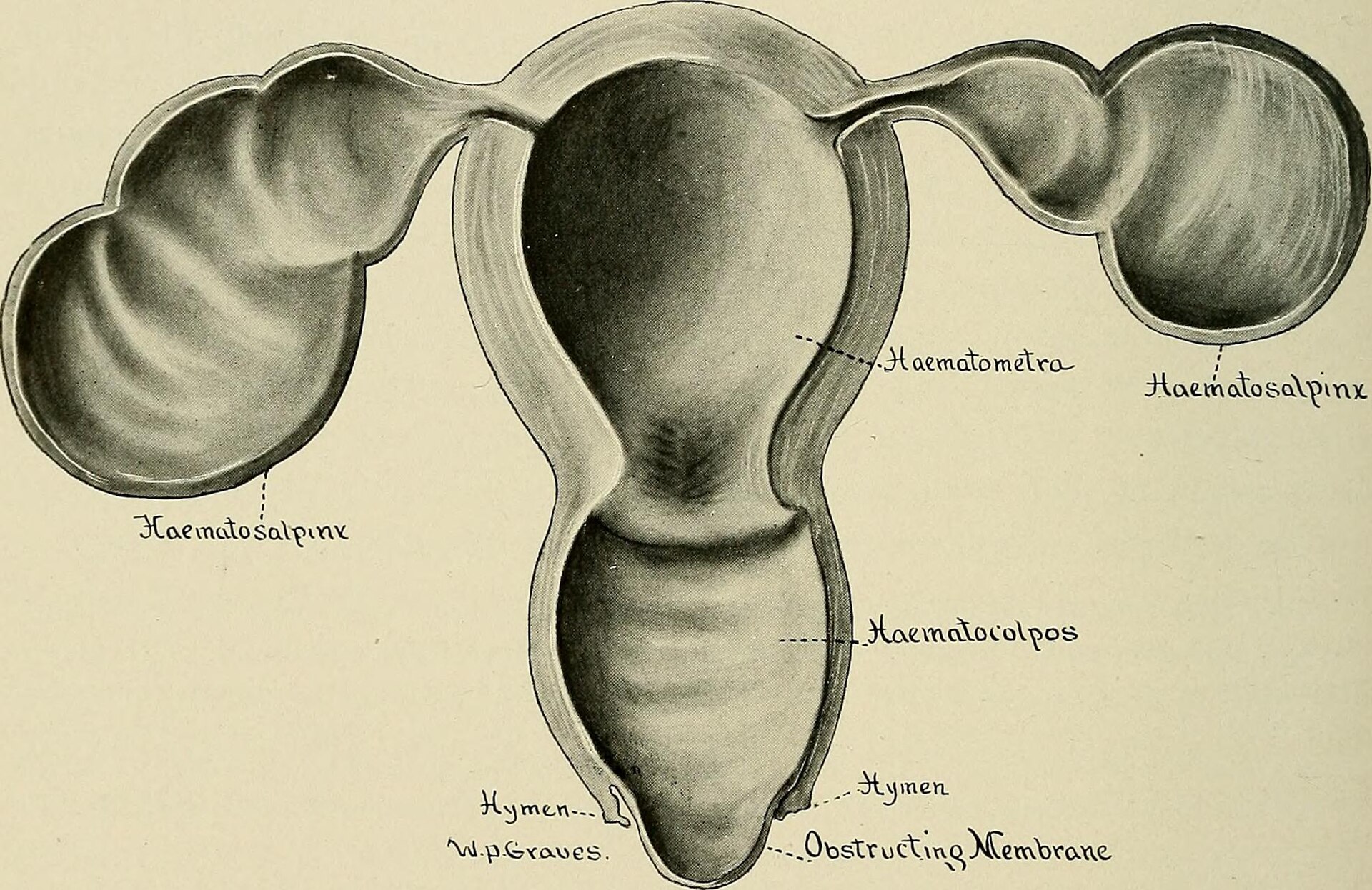
Title Image: Nineteenth Century Medical Sketch by William Phillips Graves. Source: Wikimedia Commons.

Endnotes:
[1] Theodorick Bland, “Account of an Extra-uterine Conception”, Medical Commentaries, vol. 1, (C. Elliott, 1787): 334-337.
[2] Mark R. Hagy, “Portrait of A Virginia Antifederalist: Theodorick Bland, 1742-1790,” International Social Science Review 71, no. 3/4 (1996): 3-13.
[3] Bland, “Account of an Extra-uterine Conception”, 335.
[4] Marion Tinling, “Cawsons, Virginia, in 1795-1796.” The William and Mary Quarterly: A Magazine of Early American History, (1946): 281-291.286. Bland himself studied medicine at the University of Edinburgh and University of Pennsylvania. Philander D. Chase, “Bland, Theodorick (1742–1790)”, in the Dictionary of Virginia Biography, edited by Sara B. Bearss et al., Volume 2 (Richmond: Library of Virginia, 2001), 14-16.
[5] Bland, “Account of an Extra-uterine Conception”, 336.
[6] Lorraine Daston, “The nature of nature in early modern Europe.” Configurations 6, no. 2 (1998): 149-172; Daston, “What can be a scientific object? Reflections on monsters and meteors.” Bulletin of the American Academy of Arts and Sciences 52, no. 2 (1998): 35-50.
[7] Daston, “What can be a scientific object?”, 39.
[8] Early modern anatomists moreover classed intersex, or “hermaphrodite”, people of African descent as “monstrous” or “monsters”. See William Cheselden, The Anatomy of the Human Body, 4th edition (W. Bowyer, 1730), 314; Everard Home, “An account of the dissection of an hermaphrodite dog. To which are prefixed, some observations on hermaphrodites general.” Philosophical Transactions of the Royal Society of London 89 (1799): 157-178.
[9] Colleen Campbell, “Medical violence, obstetric racism, and the limits of informed consent for black women.” J. Race & L 47 (2021); Cronin, Monica. “Anarcha, Betsey, Lucy, and the women whose names were not recorded: The legacy of J Marion Sims.” Anaesthesia and Intensive Care 48, no. 3_suppl (2020): 6-13.
[10] Maria Rovito, “(Anger) The Cycle of Pain: Endometriosis, Medical Racism, and the Violence of Gynecological Knowledge,” in Cripping Endometriosis: Feminist Disability Histories and Reflections on Power and Pain, (Springer Nature Switzerland, 2026): 77-109.
[11] F. Nash Boney, “Doctor Thomas Hamilton: Two views of a gentleman of the Old South.” Phylon (1960-) 28, no. 3 (1967): 288-292), 290.
[12] Medical beliefs of African American insensitivity to pain are characteristic of the era. See for example Philip Tidyman, “A Sketch of the Most Remarkable Diseases of the Negroes of the Southern States, with an Account of the Method of Treating Them, Accompanied by Physiological Observations.” The Philadelphia Journal of the Medical and Physical Sciences, vol. 3, no. 6, (Philadelphia: 1826): 306-339.
[13] Jacqueline Van Gent, “Rethinking savagery: Slavery experiences and the role of emotions in Oldendorp’s mission ethnography.” History of the Human Sciences 32, no. 4 (2019): 28-42.
[14] Dannelle Gutarra Cordero, She Is Weeping, (Cambridge University Press, 2021).
[15] Erin Austin Dwyer, Mastering Emotions: Feelings, Power, and Slavery in the United States (University of Pennsylvania Press, 2021).
[16] Beth R. Wilson, “‘Her work of love’: forced separations, maternal grief, and enslaved mothers’ emotional practices in the antebellum US South,” Slavery & Abolition 45, no. 1 (2024): 80-98.
[17] Xavier Reader, ““An Itchin ’Roun the Heart You Can’t Get at to Scratch”: Exploring the Emotion of Love in Black Enslaved Communities of the Nineteenth Century.” Journal of American Studies 57, no. 4 (2023): 463–89.
[18] Barbara H. Rosenwein, “Problems and Methods in the History of Emotions.” Passions in context 1, no. 1 (2010): 1-32, 20.
[19] John Archer, “Facts illustrating a disease peculiar to the female children of Negro slaves”, The Medical Repository. United States: T. & J. Swords, 1810), 319-323.
[20] Archer, “Facts illustrating a disease”, 319.
[21] Archer, “Facts illustrating a disease”, 320.
[22] Archer, “Facts illustrating a disease”, 320.
[23] Archer, “Facts illustrating a disease”, 320.
[24] Shane White, and Graham White, “Slave clothing and African-American culture in the eighteenth and nineteenth centuries.” Past & Present 148, no. 1 (1995): 149-186.
[25] Archer’s sympathetic approach is remarkable. By contrast, James Thomson, a physician practicing at St. Thomas in the Vale, Jamaica, wrote in an essay on neonatal tetanus that pregnant enslaved women, due to their “avaricious disposition”, were solely to blame for any case of premature labor or birth defects. See James Thomson, “Dissections in Convulsive Diseases,” Edinburgh Medical and Surgical Journal 14, no. 57 (1818): 614-618.
[26] George Clark, “Case of Extra-uterine gestation”, The Philadelphia Medical Museum, 2 (1806), 292-295.
[27] Clark, “Case of Extra-uterine gestation”, 293.
[28] Clark, “Case of Extra-uterine gestation”, 294.
[29] Clark, ““Case of Extra-uterine gestation”, 295.
[30] Eduardo Bonilla-Silva, “Feeling race: Theorizing the racial economy of emotions.” American Sociological Review 84, no. 1 (2019): 1-25. Bonilla-Silva defines racialized feelings as “socially engendered emotions in racialized societies”, 3.
[31] Pierre Chatard, “A case of ruptured womb”, The Medical Repository, vol.6 (United States: T. & J. Swords, 1809), 126-130.
[32] Chatard, “A case of ruptured womb”, 126.
[33] Chatard, “A case of ruptured womb”, 126.
[34] Chatard, “A case of ruptured womb”, 127.
[35] Chatard, “A case of ruptured womb”, 128.
[36] Mary Thompson Valentine, The Biography of Ephraim McDowell, M.D. (C.L. Webster, 1890, 260-261.
[37] Valentine, The Biography of Ephraim McDowell, 260-261. On McDowell see Joan E. Cashin, “Doctor Ephraim McDowell and the Human Body: Surgery, Community, Gender, and Race in the Early Republic.” Register of the Kentucky Historical Society 122, no. 3 (2024): 279-308.
[38] Valentine, The Biography of Ephraim McDowell, 261-262.
[39] Valentine, The Biography of Ephraim McDowell, 269-270.
[40] On enslaved women and hysteria see: J.G. Westmoreland, “Peculiarities and Diversified Symptoms Manifested in Hysterical Subjects.” Atlanta Medical and Surgical Journal 1, no. 9 (1856): 520-524; James C. Finley, “Remarks on the Influence of Hysteria, in Modifying the Symptoms of Febrile Diseases,” The Western Journal of the Medical and Physical Sciences 4, no. 4 (1831): 492-495; and William H. Philpot,. “A Case of Suppuration of the Brain,” Atlanta Medical and Surgical Journal 4, no. 1 (1858): 3-6. Taken together, these three medical case files from Georgia (1825–1856) reveal how Southern white physicians routinely weaponized the gendered diagnosis of hysteria to explain away severe physical illnesses in enslaved women, framing acute medical emergencies as products of a volatile nervous constitution. Whether dealing with an adolescent girl suffering from a violent malarial fever (1825), a middle-aged woman experiencing a total gastrointestinal blockage (1856), or a laborer dying from a massive brain abscess (1850s), practitioners like Doctors Finley, Westmoreland, and Philpot defaulted to hysteria as a diagnostic catch-all. This framework allowed physicians to reduce diverse, life-threatening pathologies—such as intracranial infection or severe mechanical obstructions—to a single, generalized systemic flaw tied to female reproductive and nervous biology, which they then treated with heroic medicine, including massive bloodletting, mercury purging, and electrical currents. The application of hysteria to enslaved women intersected pathologically with the economic and racial realities of chattel slavery, serving as a tool to protect labor production and validate white authority. Because an enslaved person’s illness threatened a slaveholder’s financial bottom line, physicians functioned as forensic arbiters of labor evasion; they openly doubted the patients’ timelines and physical boundaries, labeling their paralysis or suffering as “deceit” or “malingering” until confirmed by prolonged clinical observation. These records expose the direct, causal link between plantation labor and biological trauma—as seen when Dr. Finley explicitly blamed an adolescent’s “suppressed menses” and subsequent hysterical mania on her being forced to pick cotton in freezing morning dews.
[41] Valentine, The Biography of Ephraim McDowell, 270-273.
[42] Pleasant Cotton, “Singular Case of Extra Uterine Conception”, New-York Medical and Physical Journal, v.1, (1822): 325-326.
[43] John Harley Warner, The Therapeutic Perspective: Medical Practice, Knowledge, and Identity in America, 1820-1885 (Princeton University Press, 1997).
[44] John J.U. Van Buren, “Two Cases of Cæsarean Operation”, The London Medical and Physical Journal vol. 49 (J. Souter, 1823), 91-95.
[45] Van Buren, “Two Cases of Cæsarean Operation”, 91-95.
[46] Van Buren, “Two Cases of Cæsarean Operation”, 94.
[47] Van Buren, “Two Cases of Cæsarean Operation”, 95.
[48] Van Buren, “Two Cases of Cæsarean Operation”, 95.
[49] Joseph Skinner, “Scirrhus Tumour of the Uterus”, The Philadelphia Journal of the Medical and Physical Sciences, (Carey, Lea & Carey, 1825) 383-386.
[50] Kathleen M. Brown; The Penn & Slavery Project. Pennsylvania History: A Journal of Mid-Atlantic Studies 30 January 2026; 93 (1): 26–30; Archana Upadhyay, “Penn and Slavery Fall 2018 Research Report,” Penn and Slavery Project, University of Pennsylvania ( 2018); Samah Sharmin, “Southern Medicine at Penn Medical: Mapping the Careers of Three Physician-Enslavers from 1828-1872.” Penn History Review (2024). See also Stephen C. Kenny, “The development of medical museums in the antebellum American South: Slave bodies in networks of anatomical exchange,” Bulletin of the History of Medicine 87, no. 1 (2013): 32-62.
[51] William E. Horner, Catalogue of the Wistar or Anatomical Museum of the University of Pennsylvania, 3rd edition (L.R Bailey, 1850), 33.
[52] On the Wistar Museum see: Paul Wolff Mitchell, “The Making and Unmaking of Cranial Race Science: the Origins and Afterlives of Human Skull Collections, 1768-1851.” PhD diss., University of Pennsylvania, 2022.
[53] Harrison Allen, “The Objects of the Wistar Institute”, University Medical Magazine (University of Pennsylvania Press, 1894.
[54] Catalogue of the Contents of the Museum of the Royal College of Surgeons in London, volume IV, (R. and J.E. Taylor, 1838), 190.
[55] Catalogue of the Contents, 190.
[56] Catalogue of the Contents, 190.
[57] The American Journal of the Medical Sciences. (J.B. Lippincott, Company, 1827), 111-112.
[58] William Stedman, “Contributions to Operative Surgery”, The Edinburgh Medical and Surgical Journal (Arch. Constable & Comp., 1832), 26-28.
[59] Stedman, “Contributions”, 26.
[60] “Clinical Reports: Pennsylvania Hospital”, The Medical Examiner vol. 1, no. 20 (Philadelphia: 1838), 326.
[61] Richard Collier, “Action of the Ergot of Rye”, The Lancet, volume 2, (1838/1839), 8.
[62] N.L. M’Guire and B.W. Groce “A Case of Laceration of the Womb”, The New York Lancet. (United States: J.G. Bennett and J.A. Houston), 1842, 411.
[63] On Huldah’s enslaver, see Thomas McAdory Owen, History of Alabama and Dictionary of Alabama Biography (S. J. Clarke Publishing Company, 1921), 902.
[64] Michael A. Frölich, et al, “Why do pregnant women die? A review of maternal deaths from 1990 to 2010 at the University of Alabama at Birmingham.” Anesthesia & Analgesia 119, no. 5 (2014): 1135-1139; Jasmine D. Johnson, “Black pregnancy-related mortality in the United States.” Obstetrics and Gynecology Clinics 51, no. 1 (2024): 1-16.
[65] Dennis O. McCay, Nancy Borkowski, Larry Hearld, James Byrd, Jerry M. Trimm, and Jack Duncan. “A case study: Organizational and environmental factors associated with Alabama rural hospitals’ reported levels of financial distress.” Journal of Healthcare Finance (2019).
[66] M. Goldin Evans, et al, “The Southern Center for Maternal Health Equity (SCMHE): A multisector multifaceted community-based approach to reduce disparities in maternal morbidity and mortality in the Gulf South”, Frontiers in Public Health, vol. 12. (2024).
Leave a Reply